News
NEWS
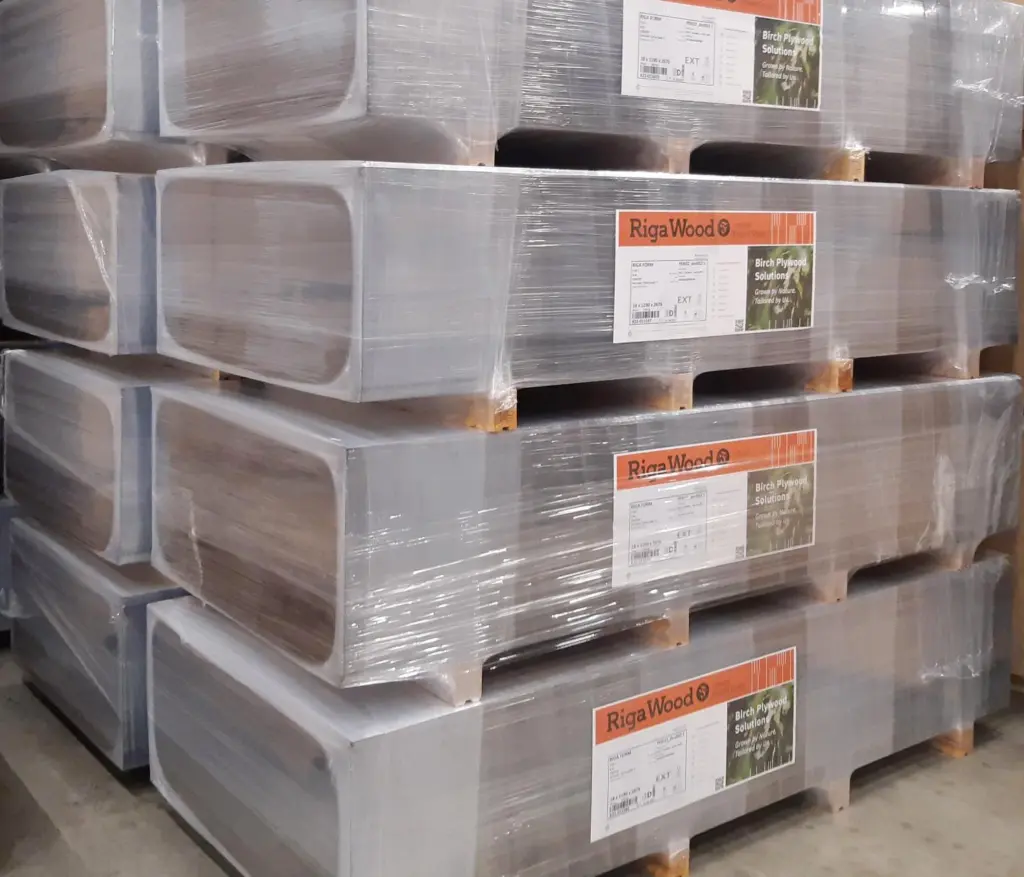
How does a plywood package survive a journey of thousands of kilometres?
Between the mill and the customer, one package can pass through dozens of handling points. Along the way, it’s lifted onto a forklift, stacked, moved again, loaded at a port, carried across the sea, unloaded, and stored before it ever reaches its destination.
Through all of it, the package has one job: keep the product exactly as it left the line, undamaged, dry, and presentable.
So why does packaging still fail along the way, whether it’s plywood or another type of board? This article looks at what actually holds up over that journey.
Our expert is Bernardino Vazquez, Business Lead for board packaging at Cross Wrap.

In brief
Plywood packaging has long relied on one method: add material until the package feels protected. Many plywood producers traditionally rely on corner protectors, straps, and cardboard applied by hand. It protects the corners, but not necessarily the whole journey.
The common method usually combines several materials such as film or wrap, straps, corner protectors, and sometimes cardboard sheets. Each one is bought separately, stored separately, and applied by hand, one step at a time. And in the end, each material must also be recycled separately.
Plywood packaging is really a protection and logistics problem, says Vazquez.
“The package has to survive repeated handling and transport, not just look right on the day it leaves the line.”
That’s the part that’s easy to miss. A package can look complete on the production floor and still fail three ports later, after being loaded and unloaded a few times and sitting through a change in humidity.
There’s also a common assumption worth questioning directly. “More material doesn’t automatically mean better protection,” Vazquez notes. “What protects the package is a process that’s been tested to work, not how heavy the wrapping looks.”
Vazquez hears this doubt often.
“People assume that only a thick, rigid material can hold up over a long journey. A stretch film looks too soft for that job. But we’ve tested and refined this method for more than twenty years. The film isn’t there to look strong. It’s there because it’s been proven to hold the package together through loading, unloading, and everything in between.”
The right material, correctly applied, can do the job of several: hold the package together, protect it from moisture and dust, and keep it stable through repeated handling.
See how it works: Latvijas Finieris, Latvia
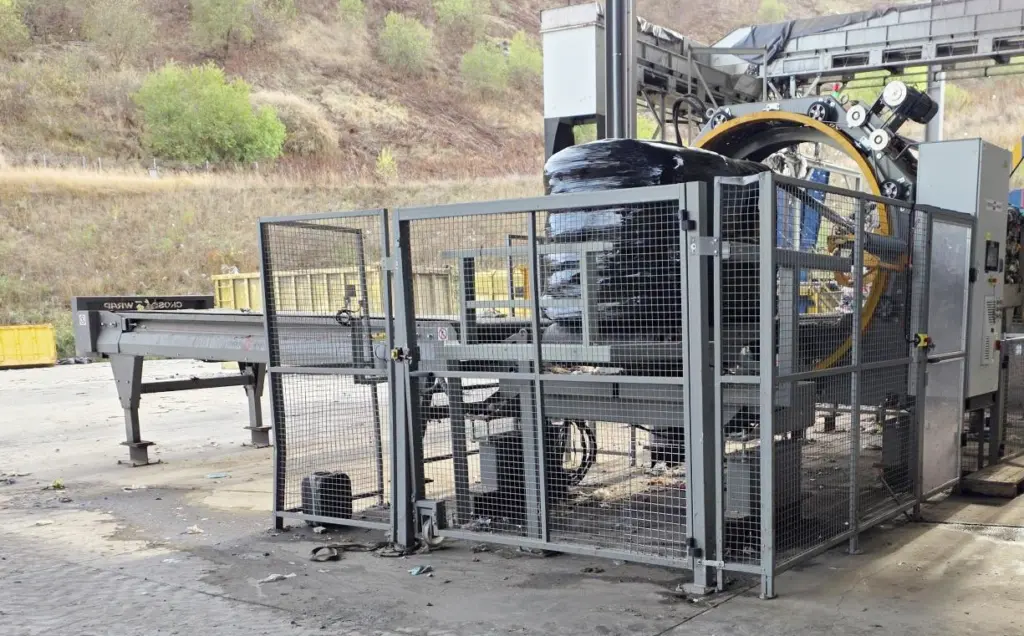
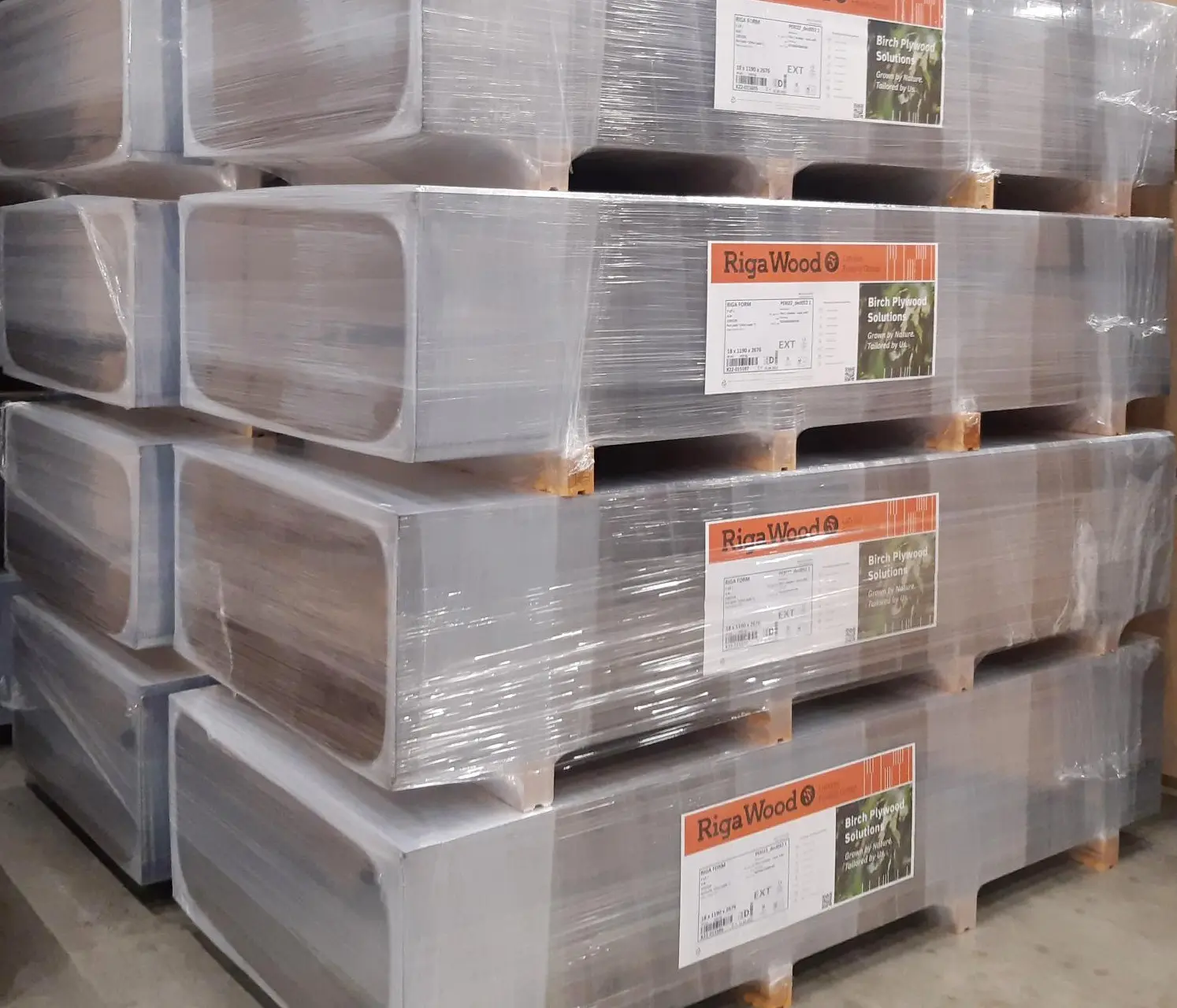
When it comes to packaging plywood or other boards built to last, Cross Wrap’s Board Packaging Solution starts differently. One recyclable film, applied automatically from all six sides, instead of several materials applied by hand.
“We’ve simplified it down to less material, less handling, and a simpler process overall,” Vazquez explains. Fewer materials means fewer purchasing, storage and disposal steps, and fewer points where quality can slip.
The bigger shift is in the thinking,” Vazquez says. “Instead of building protection out of six or eight different materials, we build it around one material engineered to do the whole job on its own.
It also tends to cost less overall. “The two main reasons customers choose this solution are quality and cost,” Vazquez says. “It’s simply the best-protected package, and a cheaper one to produce.”
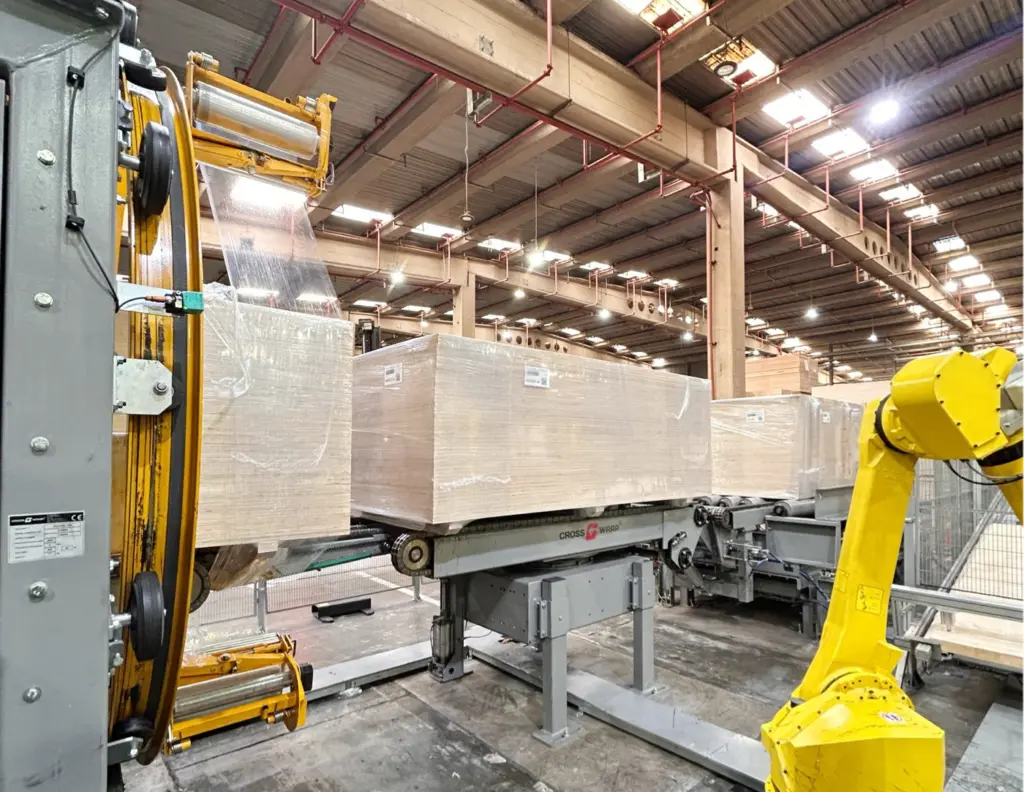
Automation itself is often misunderstood the same way as the amount of packaging material.
“People think automation is mainly about reducing labour, and it does that too,” Vazquez says.
“But the bigger point is consistency: predictable material use, planned quality, capacity you can rely on. Without it, facilities often end up using far more material than they need, simply because manual work isn’t consistent from one shift to the next.”
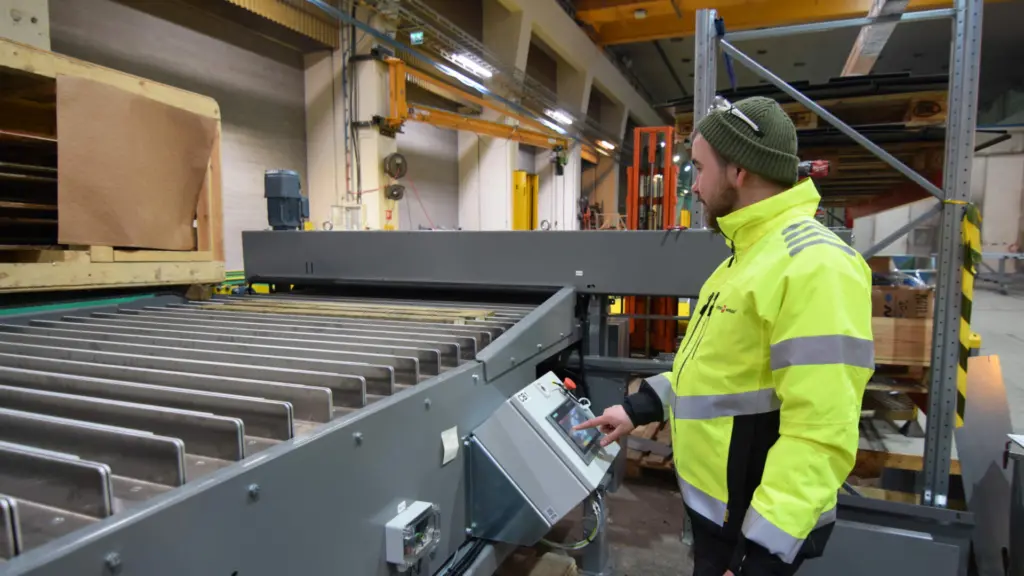
Because the line can be integrated into the production flow or configured as an offline packaging process, boards move from the stack into a finished, labeled package without a separate manual packing stage. The same solution also adapts to different package formats.
The film holds the package together as one stable unit. It protects against moisture and dust, and keeps the package intact even after it’s been opened once and needs to be resecured along the way.
Read more about Board Packaging solution: a market-leading solution that works with almost any flat material such as plywood, veneer, MDF, particleboard, or other panels.
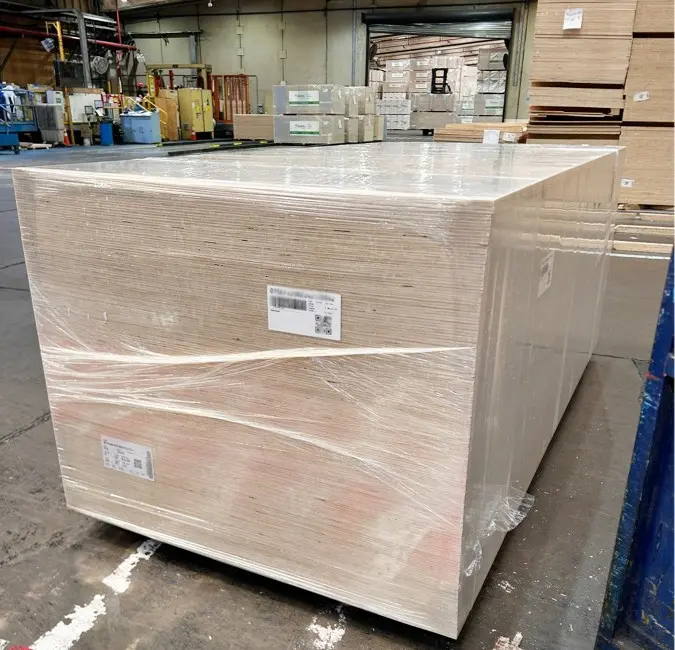
These practices apply just as well to plywood as to other board and panel packaging:
This shift toward less material is also an investment in what’s coming. European packaging regulation, including the Packaging and Packaging Waste Regulation (PPWR), is pushing the whole industry toward wiser packaging: using no more packaging material than necessary to do the job. A single, strong recyclable film in place of several separate materials already fits that direction.
Want to hear more about what an automated strap-free solution could do for your production line? Get in touch!
Leave us a message, and our expert will get in touch to discuss your case.
"*" indicates required fields