Why use many packaging materials when one does the job better?
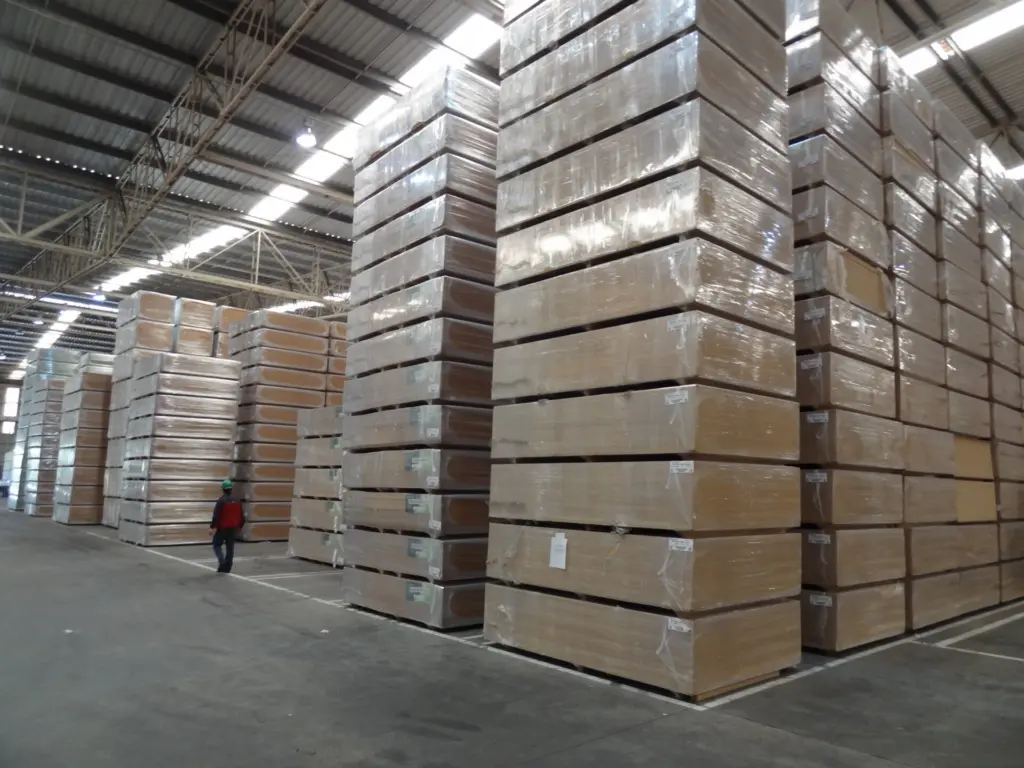
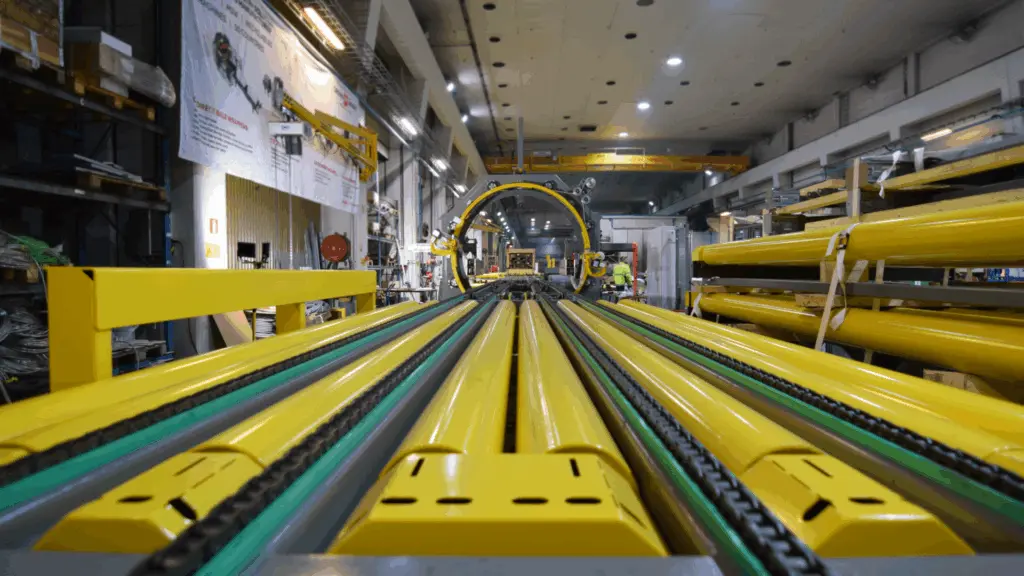
Automated industrial packaging solution wraps plywood, veneer, MDF, and other panel products on all six sides in a single recyclable film.
No straps, no manual phases, no mixed materials to recycle. Monomaterial design is exactly where packaging regulation is heading too.
Do these challenges in industrial B2B packaging sound familiar?
Traditional packaging relies on steel or plastic straps, yet straps cover only a fraction of the package. Boards stay exposed to moisture, dust, and dirt through storage and transport, and straps can loosen, shift, or press marks into the very edges they should protect.
How many different packaging materials does your line manage today?
Using multiple materials such as straps, corner protectors, stretch film and pallets increases both cost and complexity. Each material needs to be purchased, stored, and handled separately, which ties up capital and warehouse space. Strapped packages are also harder to stack efficiently, which wastes warehouse and container space. Heavier packaging materials can raise transport costs too.
During long export journeys, humidity, handling, and shipping test every package. When packaging gives in halfway across the ocean, the price is paid in claims, returns, and re-deliveries.
And there is a quieter cost too: the product is judged by the state it arrives in. For export-driven mills, the package is part of the product.
Customers and regulators push for recyclable packaging, but a traditional board package works against that goal: steel straps, wood, cardboard, and film mixed in one package. Before it can be recycled, materials must be separated.
A single recyclable material simplifies end-of-life handling. And since the amount of film is adjustable, it is also used only as much as it is needed.
Production runs on automation, but at the end of the line, packaging still happens by hand: strapping, protecting corners, covering. Manual phases mean uneven quality, and no one can keep hand-packed packages identical shift after shift.
How much skilled time does the packaging stage take per shift, and where would those hands be more valuable?
How to answer these challenges?
Simpler and stronger packaging solution.
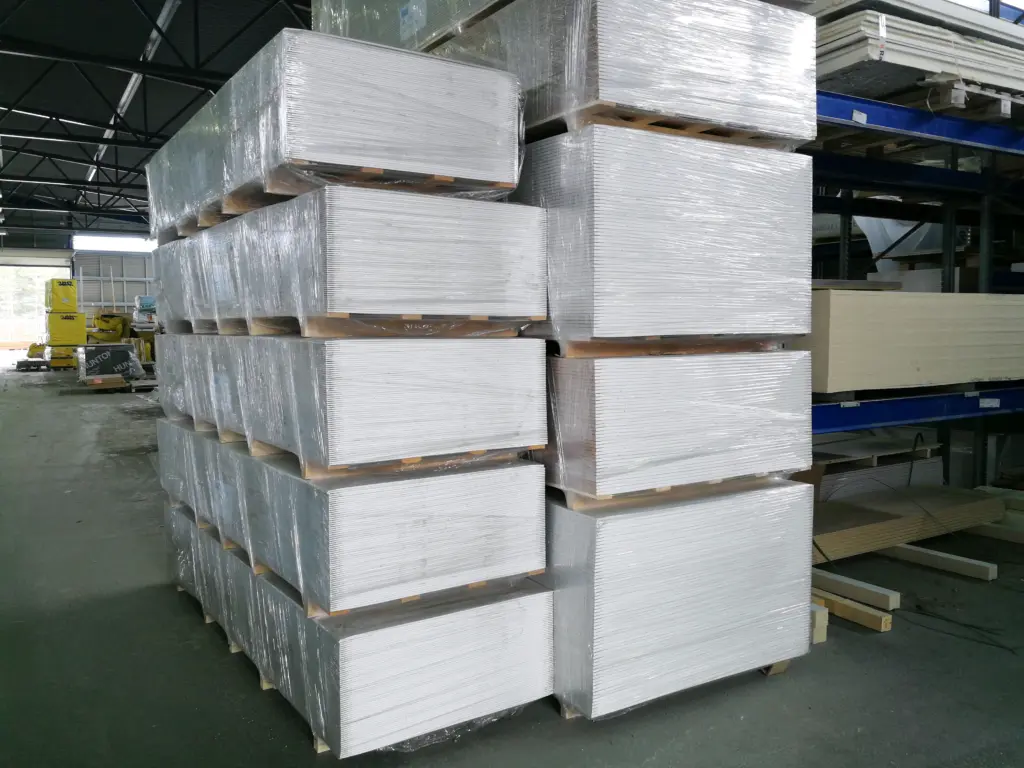
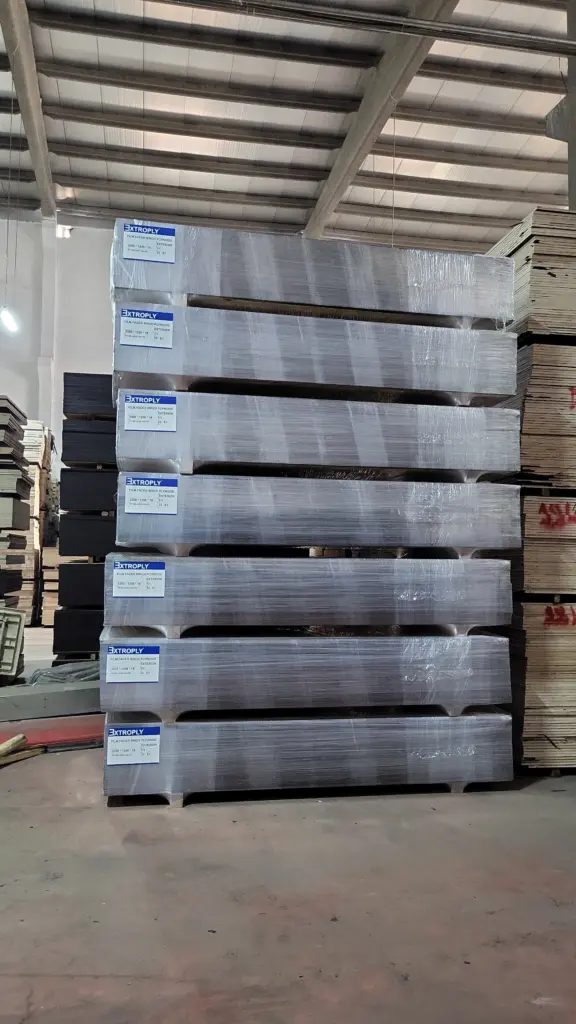
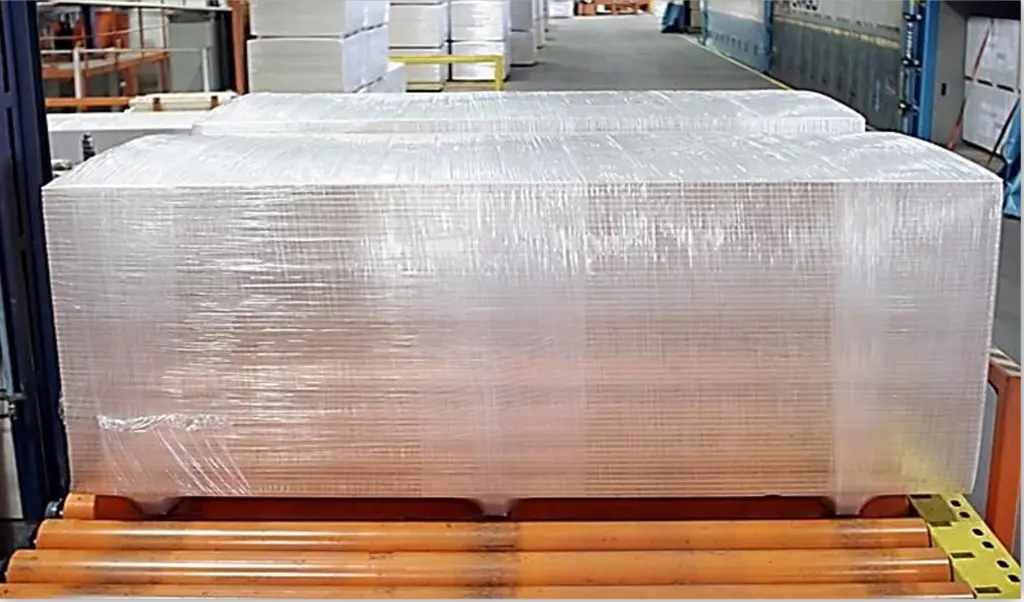
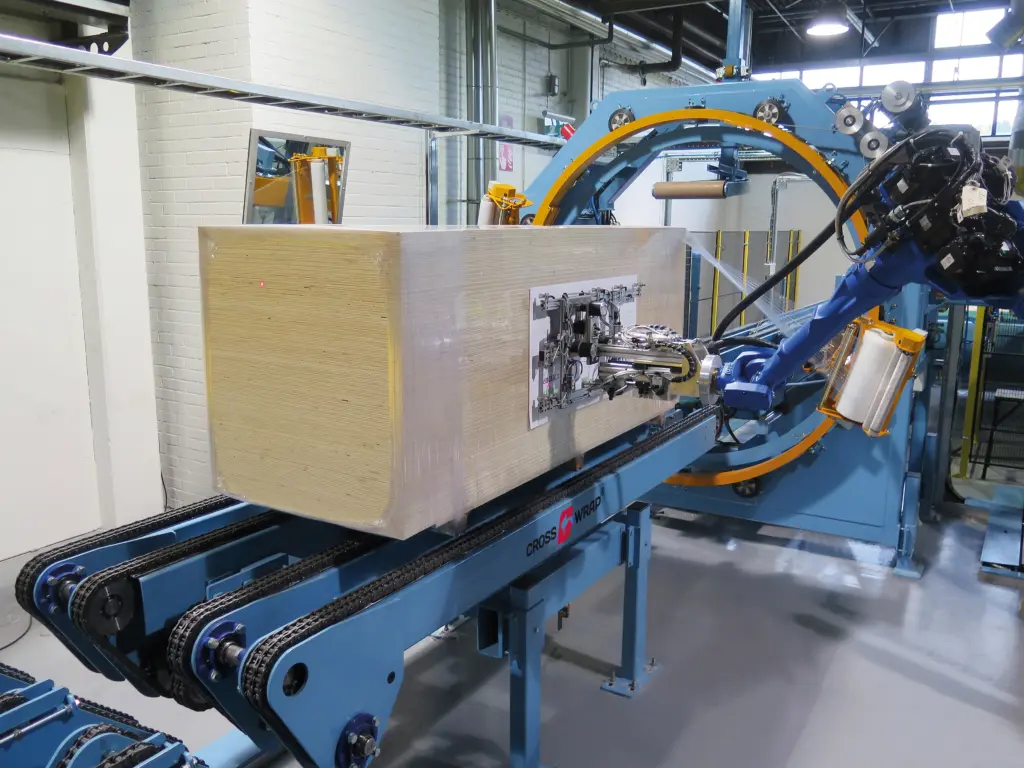
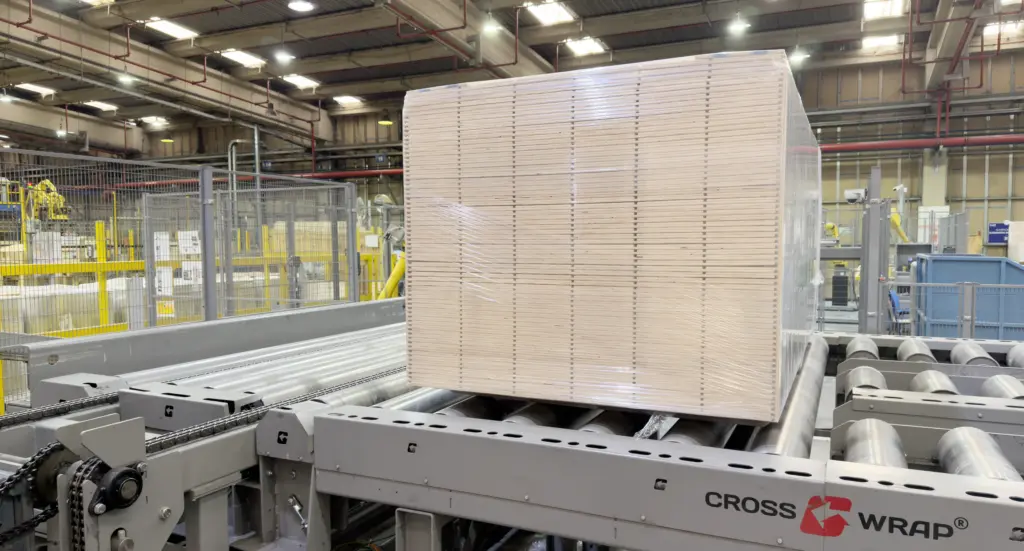
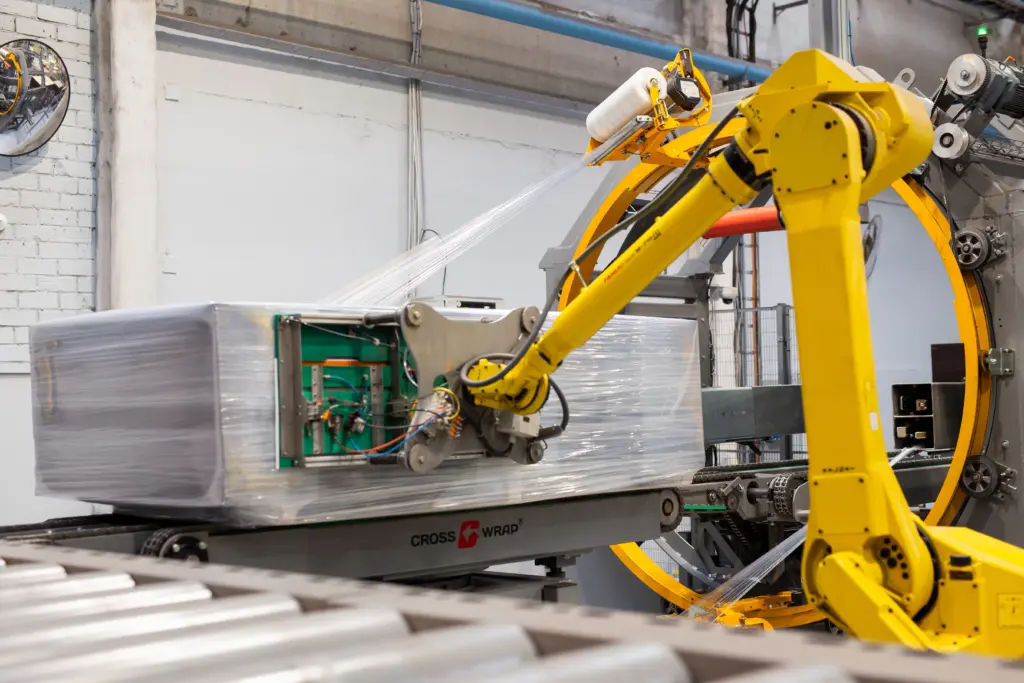
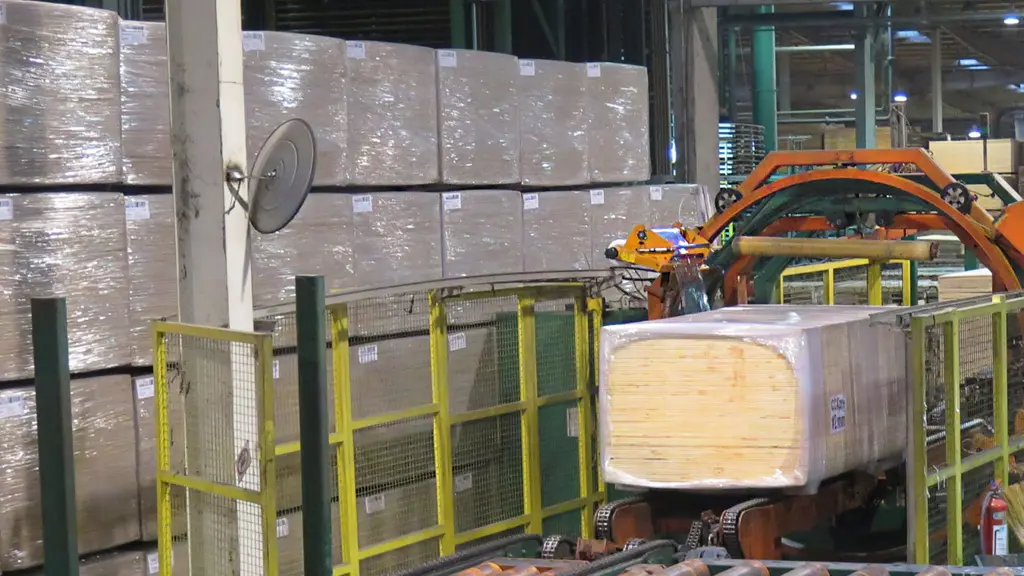
The board packaging line wraps boards on all six sides in film, creating a tight, moisture- and dust-resistant seal. This means no exposed surfaces, no loosening straps, no pressure marks on the edges. Boards remain clean, intact, and secure from the mill gate to their final destination, including outdoor storage.
The packaging line replaces straps, corner protectors, and covers with a single film solution. One material to buy, store, and manage instead of many frees up capital, warehouse space, and handling time. Film-wrapped packages also stack tighter and stay stable, so the savings continue into containers and warehouses.
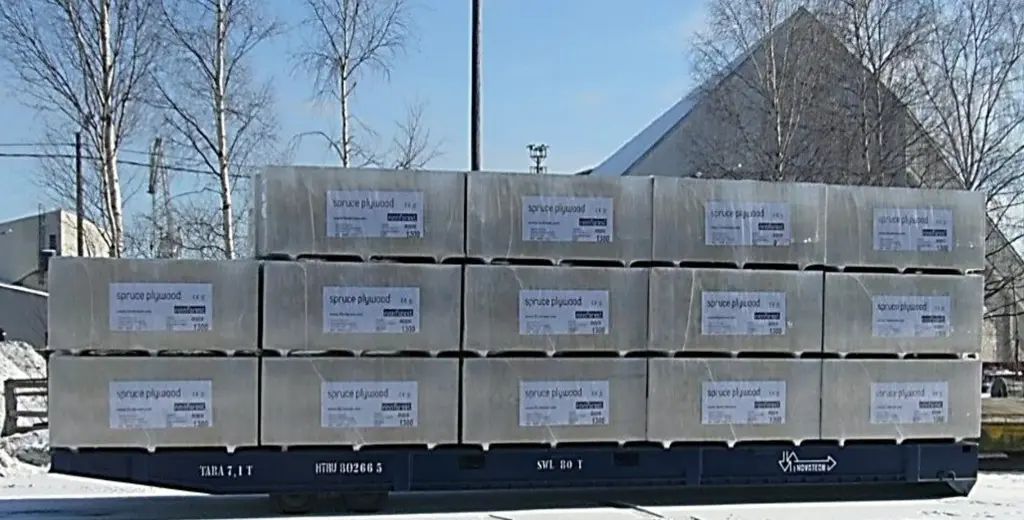
Six-sided wrapping holds through ocean freight, humidity, and multiple handlings. Boards arrive in a consistent, undamaged condition. This results in fewer claims, fewer returns, and a product that looks just as good on arrival as it did when it left the line. The package reflects the company’s reputation, and it does so effectively.
A single recyclable film needs no separation before recycling. That’s one less material for the mill to manage, and a clear answer to what customers and regulators now expect.
Film use is programmable, so each package gets exactly the protection it needs, eliminating the need to overwrap packages.
The packaging line is fully automated: wrapping, sealing, and labeling in one continuous flow, with uniform quality on every package. The team can focus on production. Thanks to the modular structure, the line connects directly to the end of the production process.
Why use stretch film?
Stretch film also fits where packaging regulation is heading. The EU’s Packaging and Packaging Waste Regulation pushes packaging design toward monomaterial solutions: fewer, simpler materials that make sorting and recycling easier. A single recyclable film is a straightforward answer to that direction.
Comparing materials in isolation rarely gives a useful answer. The right question is which material fits the situation.
Long logistics chains, several handling stages, and long transport distances call for packaging that can take repeated impact without failing. The film performs where straps, corner protectors, and covers fall short.
Film is light, and film use is programmable: every package gets exactly the protection its journey needs. A package that fails halfway through the journey creates a higher environmental cost than the film itself, in the form of a damaged board, a repacked delivery, sometimes a replacement product.
Independent life cycle assessments support the case for a lighter material: a 2025 study comparing polyethene packaging to its alternatives on the European market found a lower climate impact for the lighter option in several use cases. A similar assessment on the US market showed polyethene outperforming heavier alternatives in most comparisons. Links to more info: Sciencedirect.com, Commission EU, Sciencedirect.com.
A single recyclable film also replaces a mix of steel straps, wood, cardboard, and plastic that is difficult to recycle as one package. There is nothing to separate before recycling, and the film can come from recycled sources too.
How packaging solution works: modular and automatic solution
The board packaging solution wraps the boards on all six sides in film that seals tightly around the package. The film protects the material from moisture, dirt, and damage during storage and shipping. The process is fully automated, freeing the staff for other tasks while ensuring consistent quality.
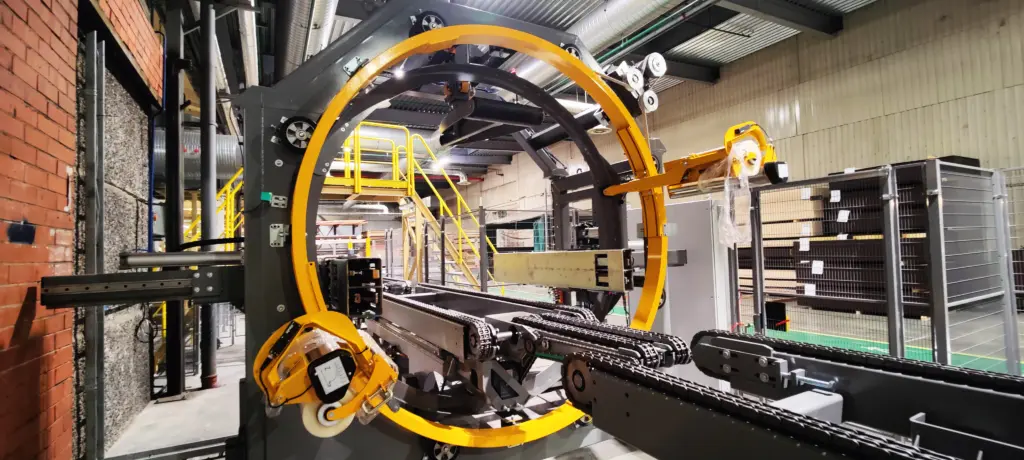
The line is built around a modular structure, making it suitable for both new and existing production lines.
The board packaging line handles a wide range of materials and package sizes, from plywood and MDF to other panel products.
Tailored film use: a lighter program for domestic transport, full six-sided protection for export.
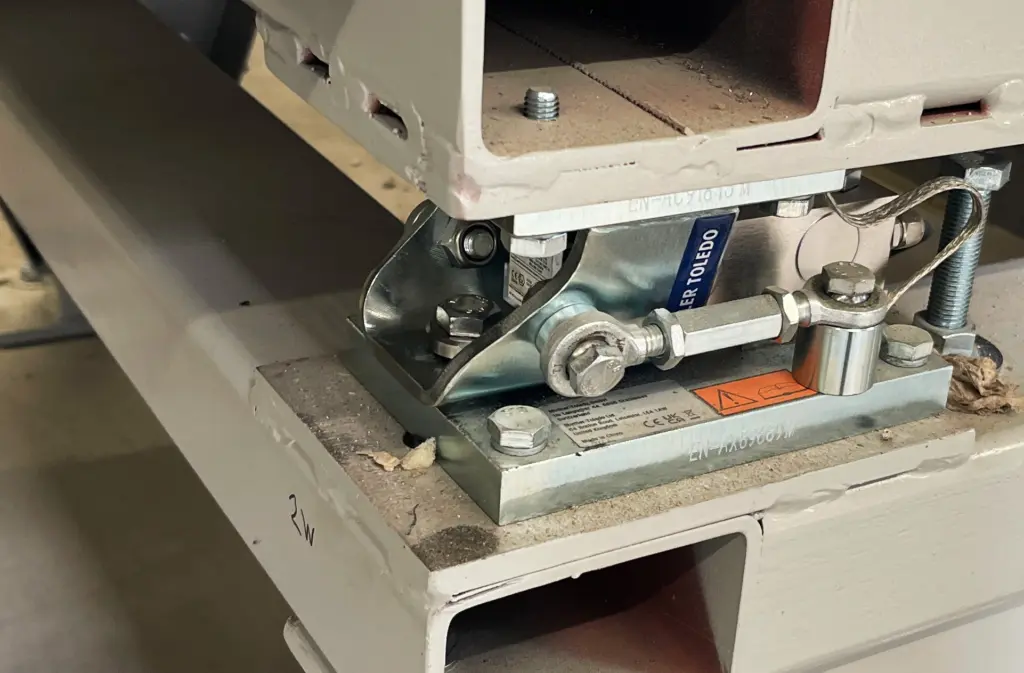
Options like weighing, labeling, and conveyors make it easy to tailor the line.
And a detail the end customer will notice: an opened package is still a package. It keeps its shape, stays easy to move, and protects the remaining boards.
Customer insight:
The automatic Cross Wrap system does very efficient packaging with good product presentation and offers perfect protection to the boards for our export.
Mr. Claudio Brasesco the Maintenance Manager for Uruply S.A. Tacuarembó mill.
More environmentally friendly packaging is definitely the direction we need to go. The package is completely sealed, and the customer receives exactly the product they want. As a result we also have greater peace of mind regarding the products our customer receive.
Edgars Eidmanis, Technologist at Latvijas Finieris.
Cross Wrap’s industrial packaging equipment
Board Packaging Line
Weatherproof and automatic packaging for boards, plywood, veneer, and more.
Versatile solutions for new and existing production lines.
Our Customer Promise: the machine is just the beginning
A packaging line is a decades-long investment, and the partnership should last as long. Cross Wrap stays involved from the first layout discussion through installation, upgrades, and every spare parts order in between. With Life Cycle Services, the line stays reliable and productive year after year, and when needs change, the solutions change with them.
Why choose Cross Wrap as a board packaging partner?
Finnish engineering, born next to the board industry. Cross Wrap machines are designed and built in Finland, home to some of the world’s leading plywood and panel manufacturers.
Proven in board mills. Strap-free packaging has protected export plywood and panel products since 2002, with the same line handling different materials and package sizes.
Automation is what we are known for. Professional automation and modular customization make the line fit the mill, whether the production line is new or existing.
Reliability you can trust. Machines are developed through years of customer feedback, continuous R&D, and experience from every installation.
Support for the whole lifecycle. OEM spare parts, upgrades and modernizations, remote service, and audits keep the line performing for decades.
FAQ
A traditional export package requires straps, corner protectors, deck boards, a cover, and film. However, Cross Wrap’s solutions only need film. One recyclable material, applied automatically on all six sides, with uniform quality on every package.
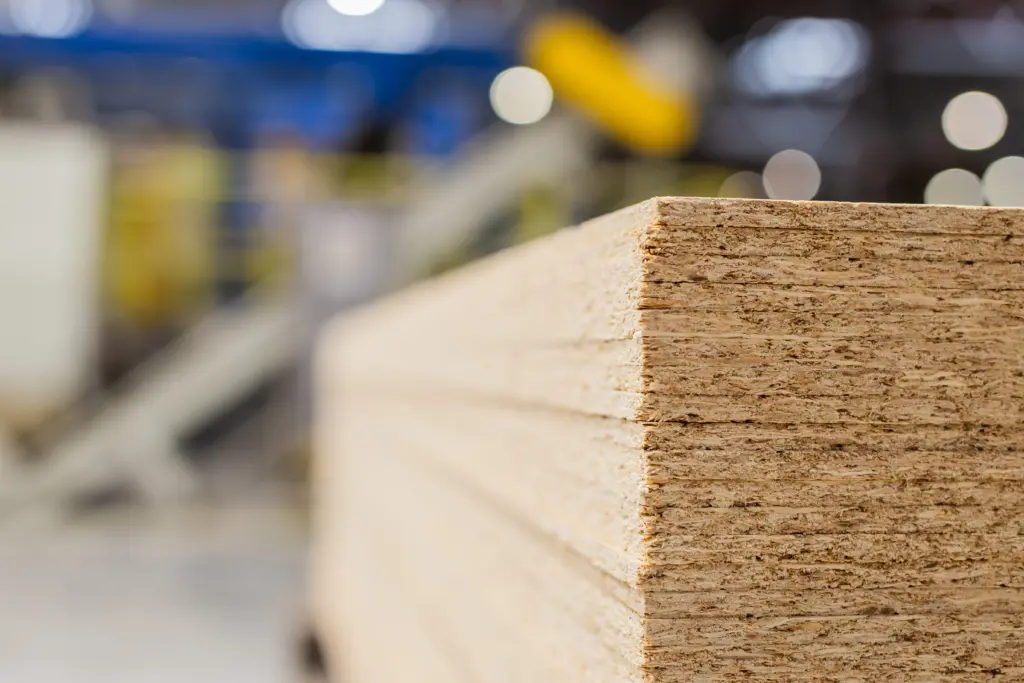
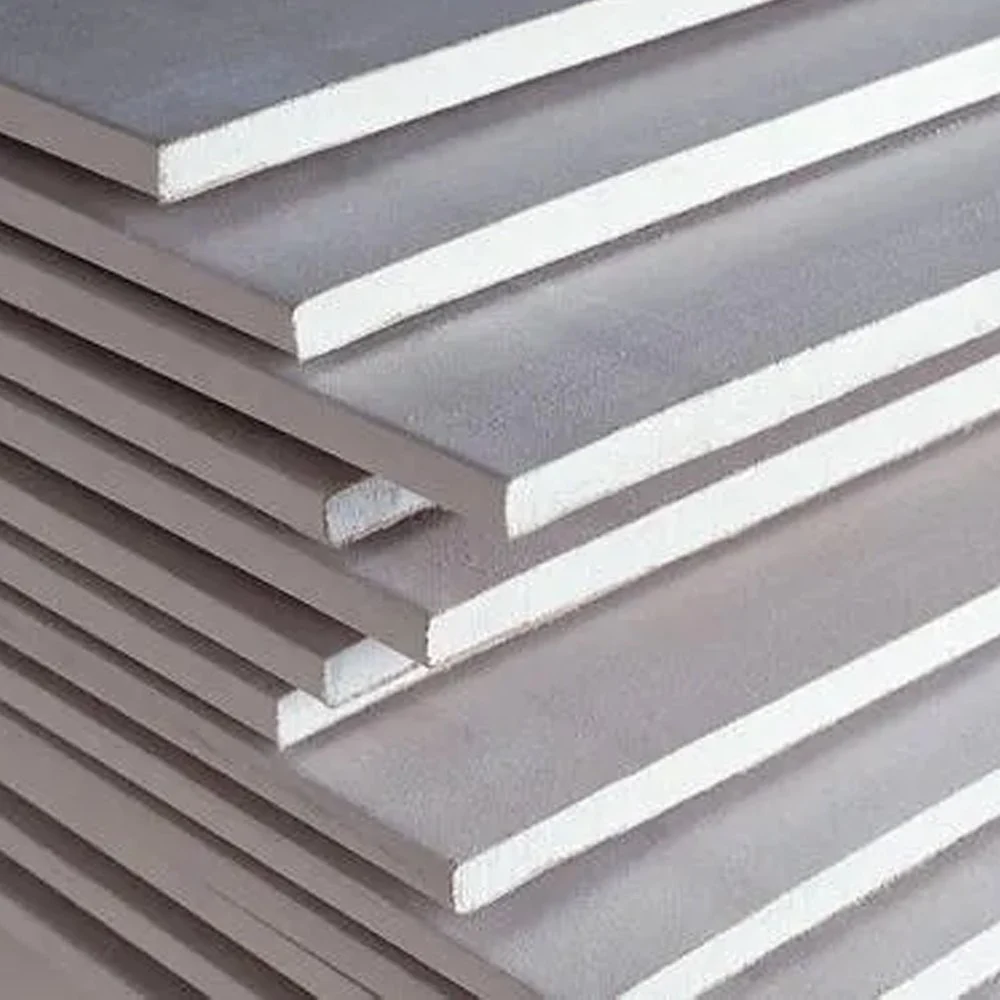
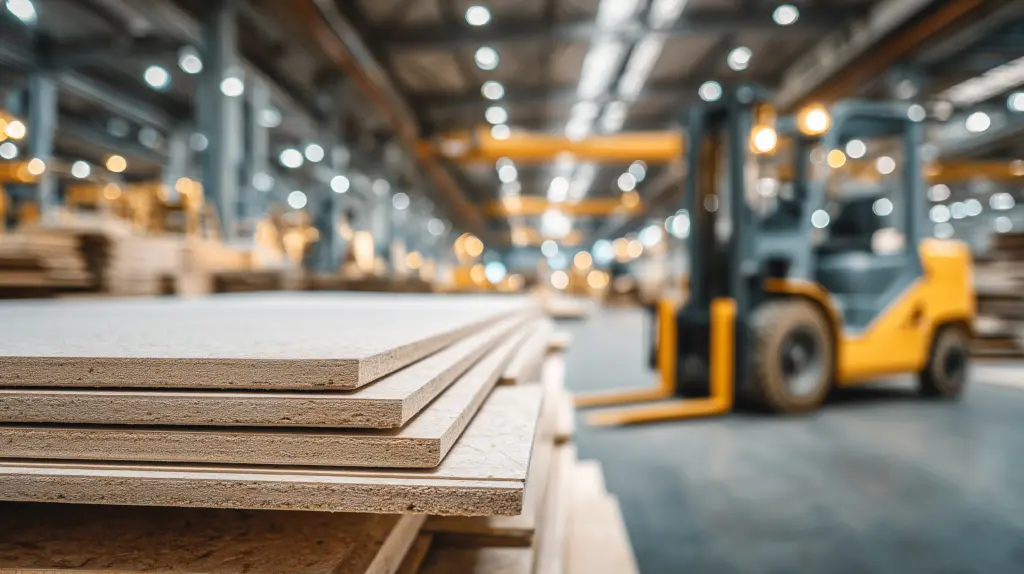
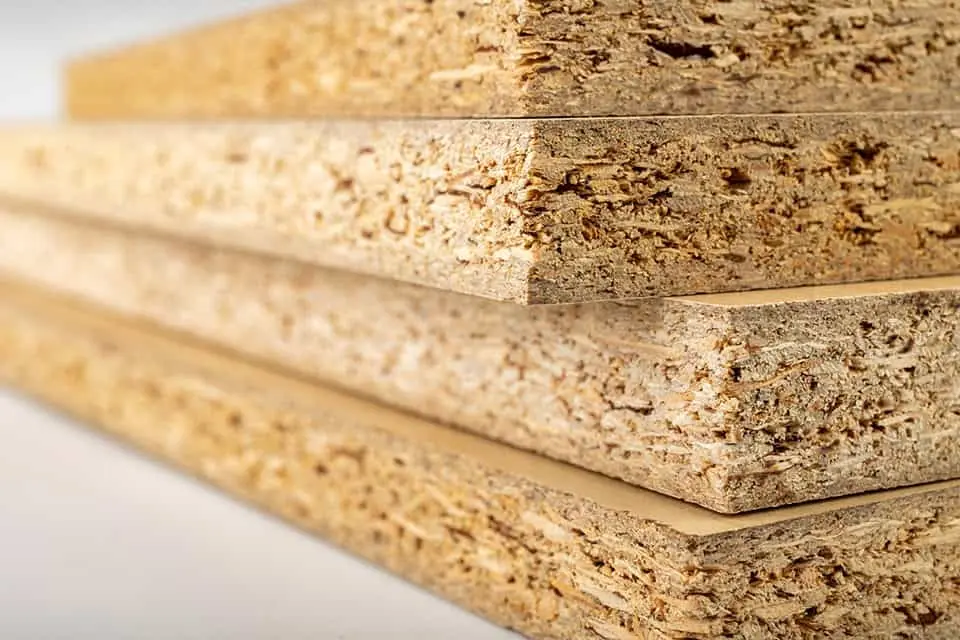
The board packaging line handles plywood, veneer, MDF, OSB, particleboard, gypsum board, and other panel products. In practice, most flat, board-like products can be wrapped, and package sizes can vary on the same line. If you have a specific material in mind, please consult our experts for assistance.
Savings come from three directions: fewer packaging materials to buy and store, less manual work per shift, and fewer claims from damaged deliveries. The exact numbers depend on the current method, and our experts will gladly calculate the comparison for your mill.
The modular structure adapts to both new and existing mills, and the line connects directly to the end of the production process. No moving packages from production to a separate packing area.
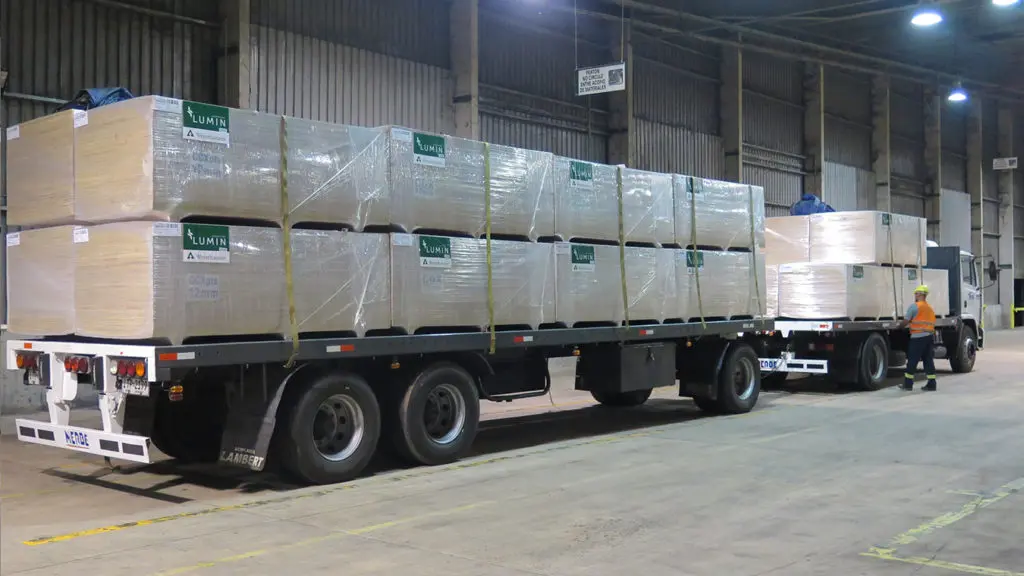
Reference Uruply S.A. in Tacuarembó, operating under the Lumin brand, has used a Cross Wrap Board Packaging Line since 2007 to automate export plywood packaging.
As production volumes grow and deliveries increase worldwide, efficient packaging becomes increasingly important. Cross Wrap delivers already fourth packaging line to the new production facilities in 2026.