Board Packaging
NEWS

Uncertain times in the paper, board and pulp industry require the ability to adapt to changing situations fast. The recycling rate of the materials is looking good, but making the best of it requires flexibility and the right tools. Even though everything is not in the facility’s own hands, it’s good to be prepared. Read how Cross Wrap’s bale dewiring and opening solutions help you automate your paper and board recycling lines.
The recycling rate of paper and cardboard is showing good signs and the European Paper Recycling Council (EPRC) estimates that a paper recycling target rate of 76 % will be met by 2030. The Confederation of European Paper Industries (CEPI) says the recycling of paper and board products has increased over the years and will continue to do so. That’s something all of us have an effect on. It’s also good to note that the price fluctuations of energy play a big role in how the future looks like for the industry – CEPI says the improved energy landscape has helped the field to recover from a harder year of 2023.
However, the times are uncertain in the paper and pulp industry. The United States has proposed high tariffs for the imports, which makes market cautious. The US provides a big share of pulp and paper recyclables worldwide. Even though there are other significant pulp suppliers in other areas such as Europe and Latin America the tariffs would leave a big gap into the market.
For example, the EU imports from the US around 900 000 tonnes per year of pulp and close to 600 000 tonnes of paper and board. On the contrary, the EU exports a lot of paper and board to the US, about 1 600 000 tonnes per year, and less pulp, around 350 000 tonnes.
The impact on the market will depend on the outcome of trade negotiations and whether higher tariffs are ultimately implemented between the US and other major pulp producers, such as the European Union and China. Existing and potential retaliatory measures on imports from the US also contribute to the situation.
In addition, the conflicts around the world affect the markets directly and indirectly. It’s safe to say that planning a future is difficult.
Global uncertainty, shifting trade policies and rising costs are today’s challenges and highlights why operational flexibility and process efficiency are critical. At Cross Wrap, we believe that robust automation is one of the smartest ways to secure process against unpredictable external factors. Our Dewiring Machine and Wire Cutter are designed to give paper recycling facilities exactly this kind of stability and adaptability.
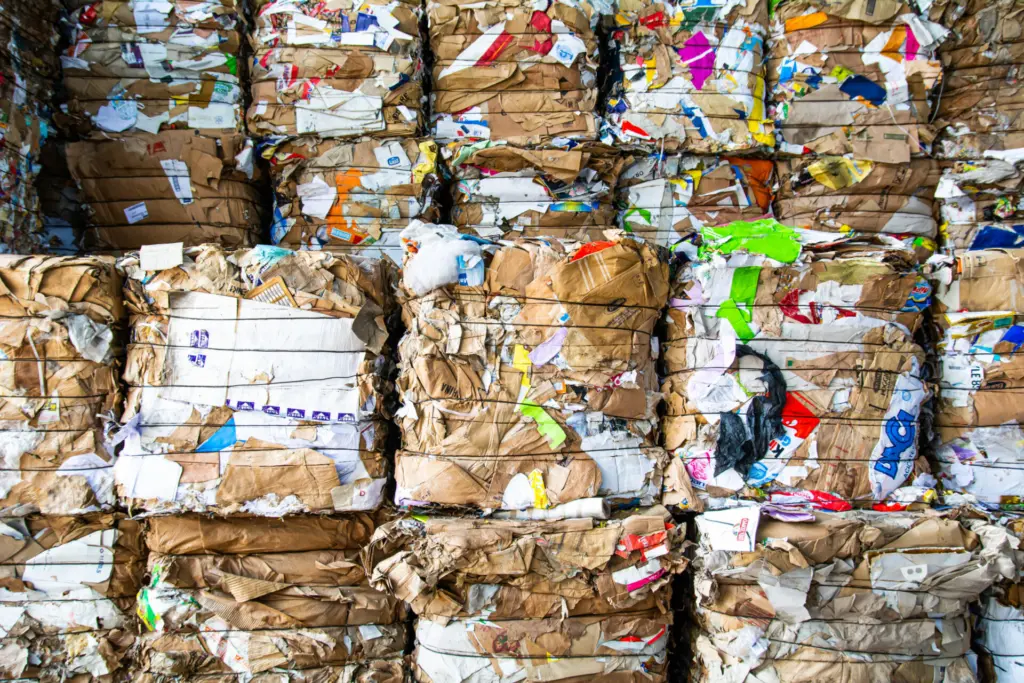
In the paper industry, the bales your facility handles are most likely tied with steel wires and without a plastic film. How do you get rid of the wires in your operation line at your facility? Cross Wrap offers automated and safe solutions for this, tailored to your specific needs.
First, let’s look at the traditional way of removing steel wires from bales: cutting the wires by hand. The repetitious work requires a lot of working hours and poses a safety risk in the workplace. We all want our workers to be healthy and safe and automating the most hazardous part of bale opening is the way to make sure of that.
Also, it’s good to note that when the wires are cut by hand, they are stored and transported with a lot of air in between them.
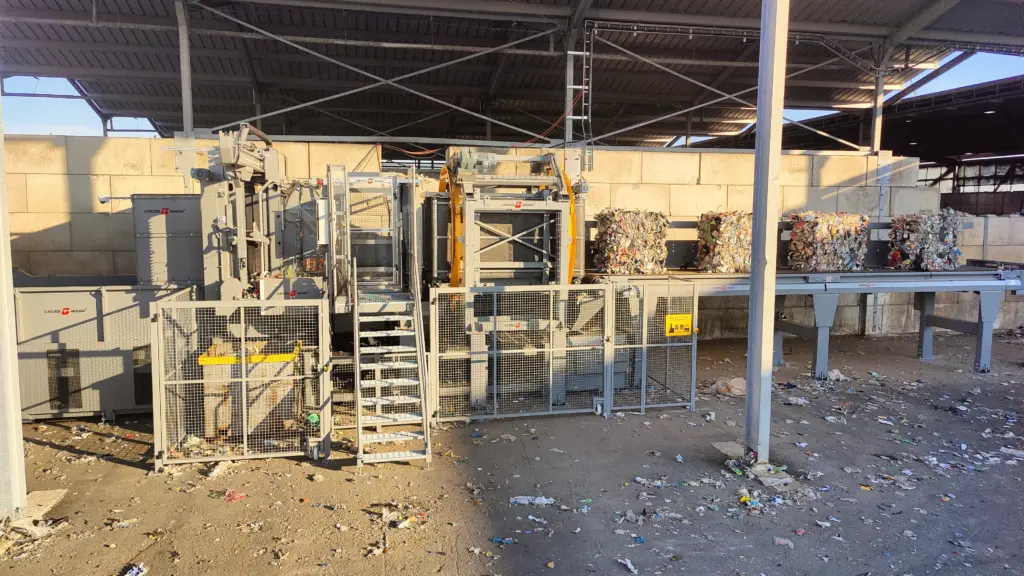
Dewiring machine cuts the metal wires and separates them from the bale. The machine coils the wires, which saves space in storage and transportation, compared to wires cut by hand.
Dewiring machine is engineered based on Cross Wrap’s patented bale dewiring method, which provides advantages including:
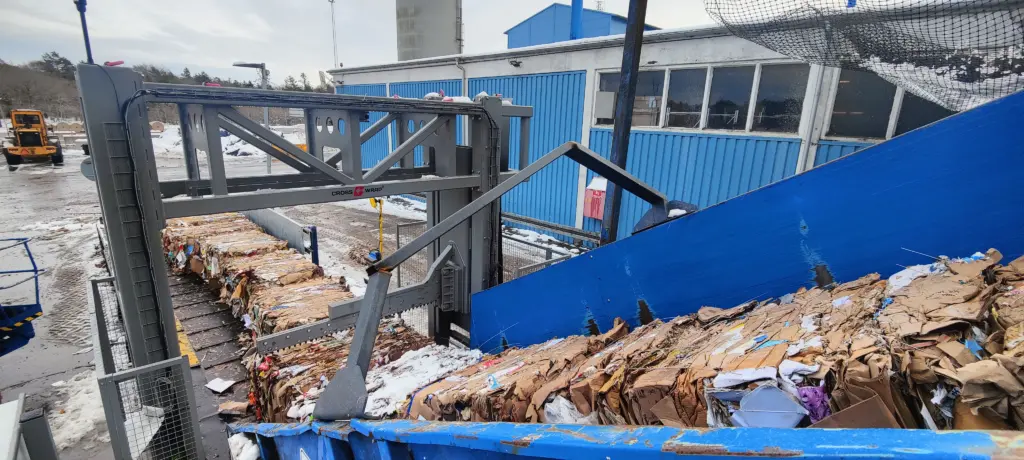
Wire cutters are compact machines that function as the lightweight versions of our Dewiring machine, without coiling and removing the wires after they have been cut. In the paper mills, where there’s a ragger rope in the pulper, the cutting of the bale wires becomes fully automatic with the Wire cutter. The advantages of our Wire cutters in the paper industry are first and foremost cost-efficiency and the easiness of the installation.
Since the wire cutters are simpler version of the dewiring machine, it’s a way to incorporate automation into your paper recycling process with a lower price. Automation doesn’t necessarily mean large investment. Wire cutters are easy to retrofit to an existing line with minimal modifications to your machinery already in use.
We offer different versions of the Wire cutter. The blades are different in each one and the most suitable one for your facility depends on the direction of the wires in the bales that you’re handling in your line.
While none of us can predict how markets will evolve, we can prepare by making smart choices that reduce vulnerability. Automated dewiring and wire cutting help you respond flexibly to new supply situations, handle fluctuating bale qualities, and maintain high productivity no matter what’s happening outside your facility.
At Cross Wrap, we’ve delivered over 100 dewiring machines and cutters worldwide. We have proven solutions that keep lines moving smoothly even in the most demanding times.
Contact us and let’s figure out the best way to increase automation, efficiency and flexibility in your operation line. Our experts are eager to help you recycle as efficiently as you can.
Leave us a message, and our expert will get in touch to discuss your case.