Bale Dewiring Machine: The most versatile wire removal
Bale Dewiring Machine: the highest wire removal rate on the market
Automated wire removal for plastics, paper and other recyclables
Safer workplace, less injuries: no need for manual wire cutting
Efficient operation: capacity up to 60 bales per hour
Engineered and manufactured in Finland
More than 100 machines delivered globally
What if your bale wire removal ran fully automated, with just one operator loading bales?
The Cross Wrap Bale Dewiring Machine automates the entire wire removal process: cutting, separating, and coiling bale wires in one continuous operation. The result is a safer workplace, a faster process, and a material flow that keeps moving regardless of shift changes or staffing.
What “Bale Dewiring” means in practice? What’s the difference between a dewiring machine and a debaler?
In the industry, you may come across the same process described as debaling, bale wire removal, or wire cutting. These terms often describe the same need, but not always the same result.
Dewiring is the automated removal of metal wires from recyclable material bales before they enter the recycling process. Cross Wrap invented the term and developed the method in Finland, where the machines are still designed and manufactured.
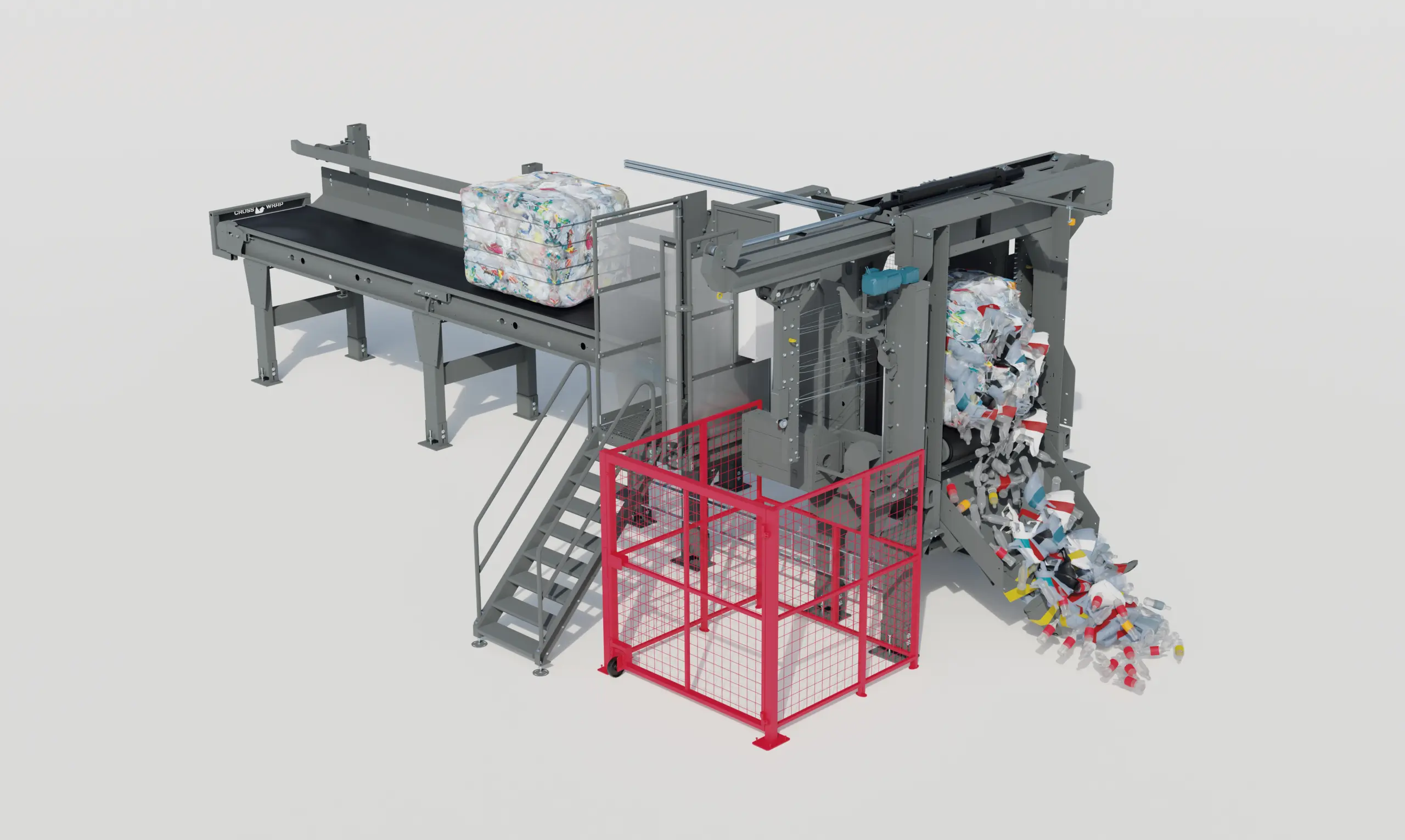
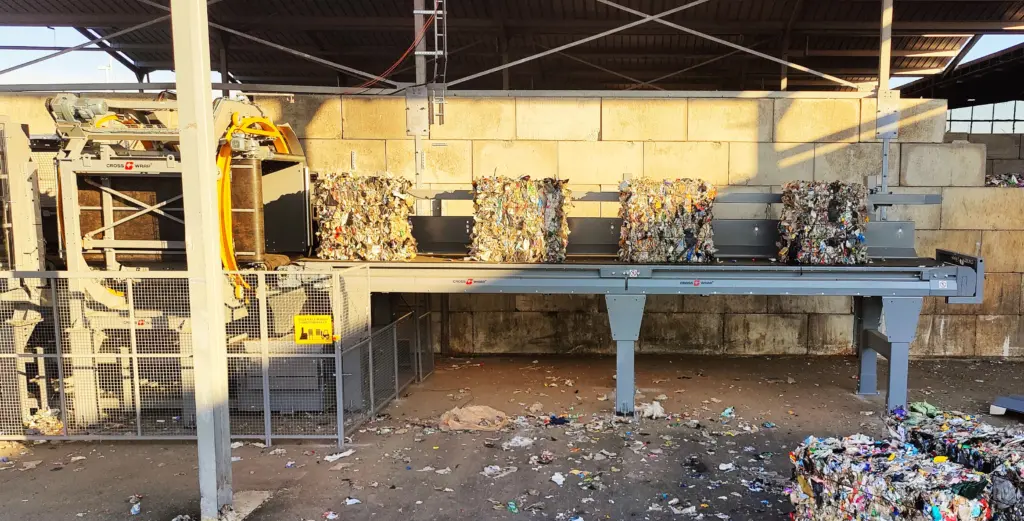
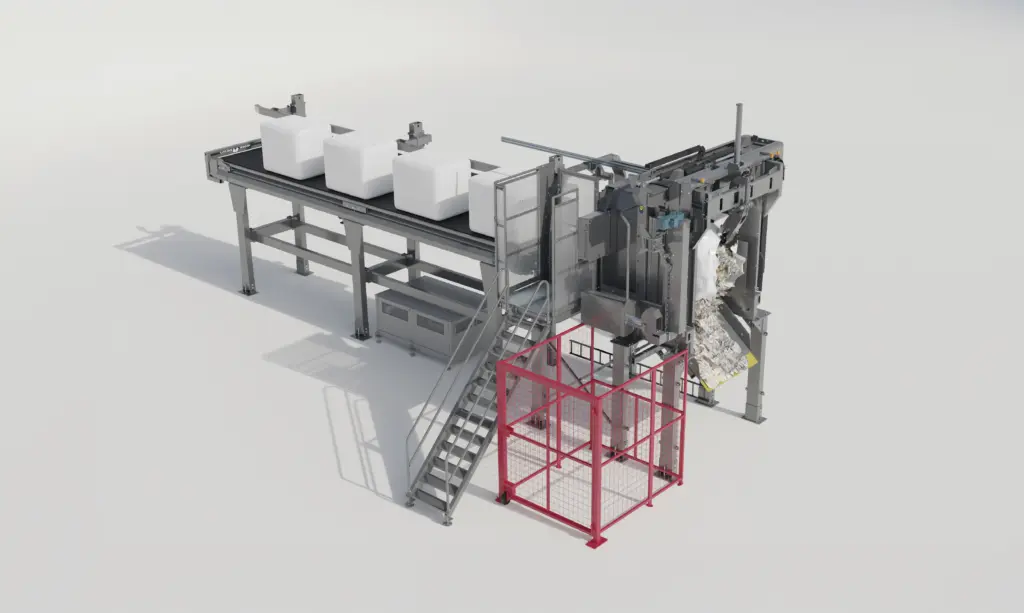
What sets Dewiring apart is the method behind it. Cross Wrap’s horizontal wire removal technology grabs the wires from one side of the bale using grippers, while cutters on the opposite side cut them cleanly.
The wires are then coiled into compact bundles, all in one automated pass. The cutters are configured to match the material, ensuring clean and reliable wire removal across different bale types.
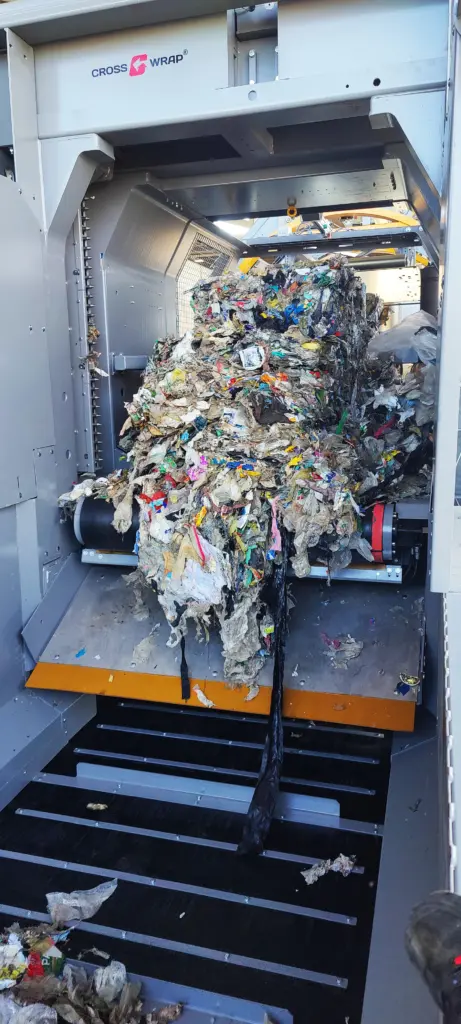
No wires left in the process. Just a clean, continuous material flow from the first bale to the last.
What materials and waste streams is the Bale Dewiring machine suitable for?
Cross Wrap’s Dewiring technology method works whether the material is soft or rigid, whether bales are lightly or heavily compressed, and whether wires run horizontally or cross-wired.
When bale wires are cut from tensioned bales by hand, it can snap back instantly and unpredictably. Fully automated wire removal eliminates that moment entirely. No manual cutting, no wire recoil, no operator exposure.
A consistent infeed determines the efficiency of everything that follows. The Dewiring Machine keeps material moving at up to 60 bales per hour, reduces bottlenecks, and cuts labor dependency at the most critical point in your process. This saves based on our calculations approximately one or two operator’s workload per shift.
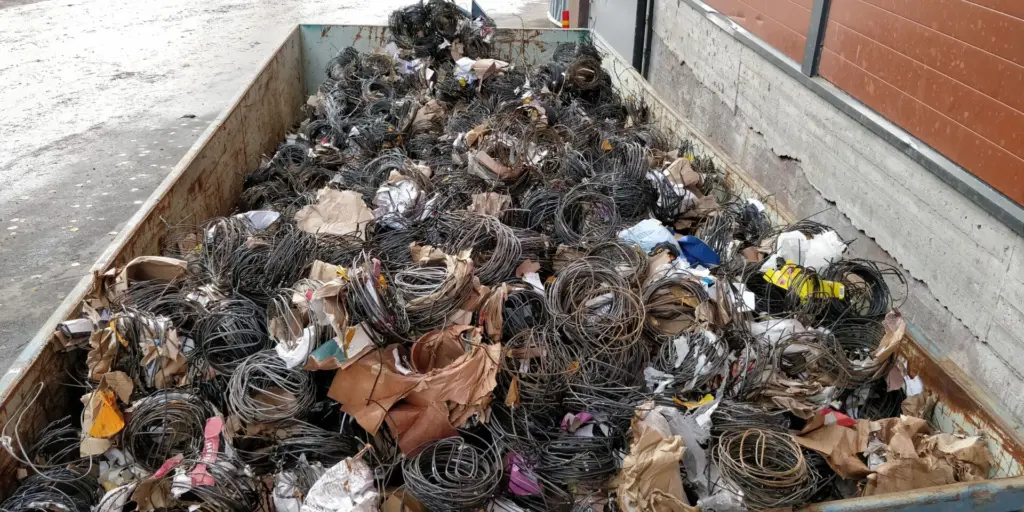
Wires that enter shredders and pulpers don’t disappear. They cause blade wear, reject buildup, and repair costs that are difficult to predict. Customers report up to 50% less shredder wear when dewiring is installed before the shredder. Remove the wires early, and the savings compound further down the line.
The Dewiring Machine uses an average of 25 kWh while running and enters automatic standby between bales. In an industry where energy costs make up roughly a third of operational expenses, that difference is measurable.
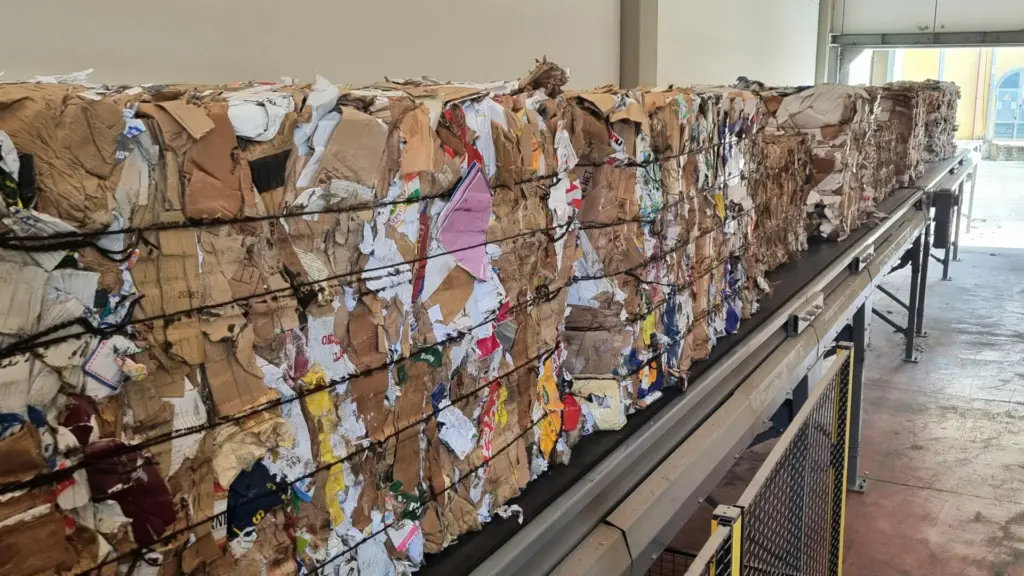
Bale sizes vary. Materials vary. Wire types vary. But that is not a problem! The Dewiring Machine handles different materials, horizontally wired and cross-wired bales, across a wide range of dimensions and weights, all in the same line. Add-ons are configured based on your actual process requirements, not a standard package.
Industrial lines don’t stop for business hours, and neither do we. Our team can adjust settings, troubleshoot, and reprogram your machine, keeping your line running and your service costs predictable.
How does a Bale Dewiring machine work?
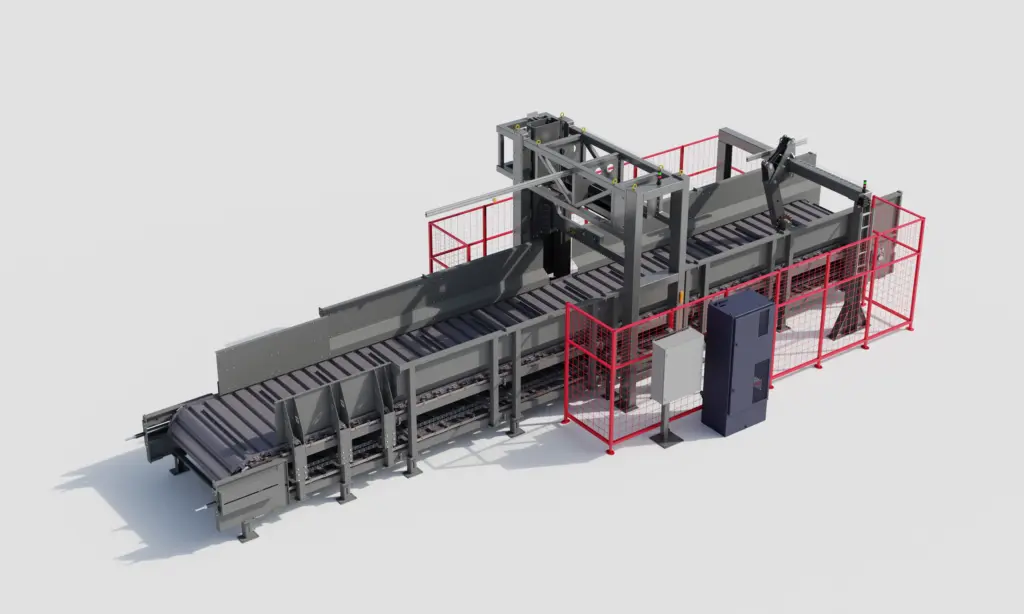
The horizontal wire removal method delivers the highest wire removal rate in the industry. The machine handles different bale sizes, materials, and wire types across soft or rigid materials, one-side wired or cross-wired bales, all in the same line.
Select a button to learn more about each machine feature.
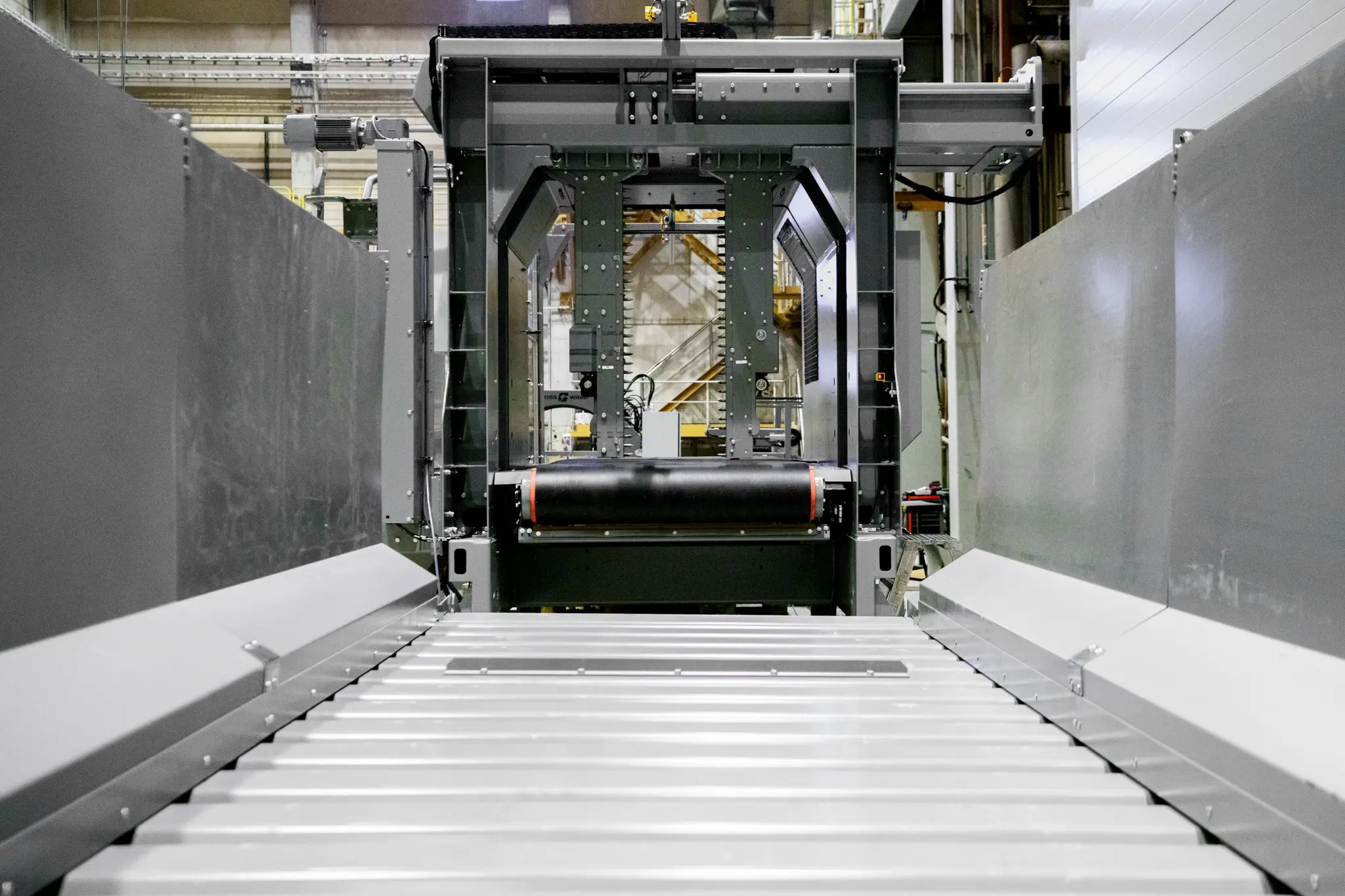
Feeding conveyor
Grippers & Cutters
Wire coiling unit
Maintenance platform & Control panel
Electric cabinet & Hydraulic unit
Dismantling area
Additional Features
Every feature on this machine has been developed with real customer input. The machine is built for a range of environments, with options for electric cabinet cooling and heating.
See list below, and if something is missing, machines are always tailored to customer needs. Please take a call and ask from our experts.
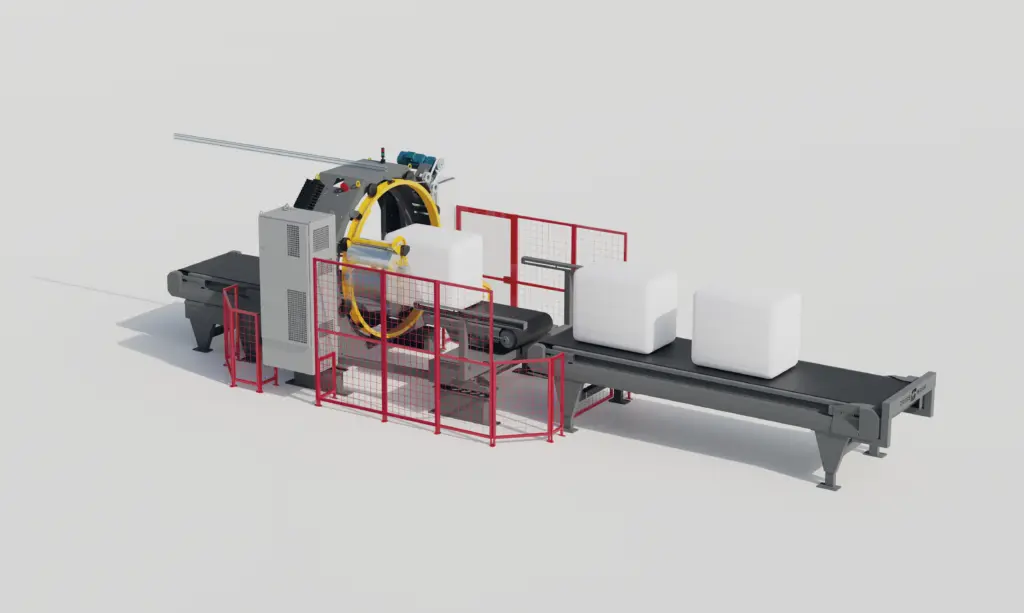
Bale Turning Unit
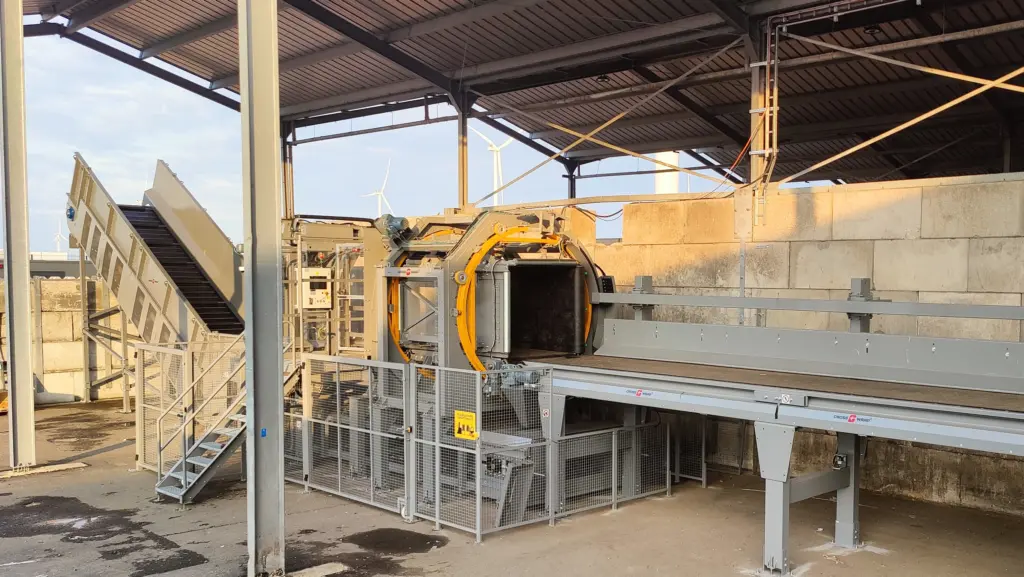
Bale turning unit makes it possible to handle both horizontal and cross-wired bales with one machine.
The machines are made for different bale size and wire needs to meet the varying customer needs. Also cross-wired bales in big sizes are coming more common.
DW1400 & DW1800 The only difference is in machine and bale height.
xDW1400for cross wired bales: This machine can open both horizontally wired and cross-wired bales. In front of the dewiring we add bale turning unit, read more here.
With 100+ dewiring machines installed worldwide, Cross Wrap is the industry benchmark in automated wire removal. We have delivered machines from paper mills to plastics recyclers, from Europe to North America. Ask from our experts, if you would like to know more solution in different plants or environments.
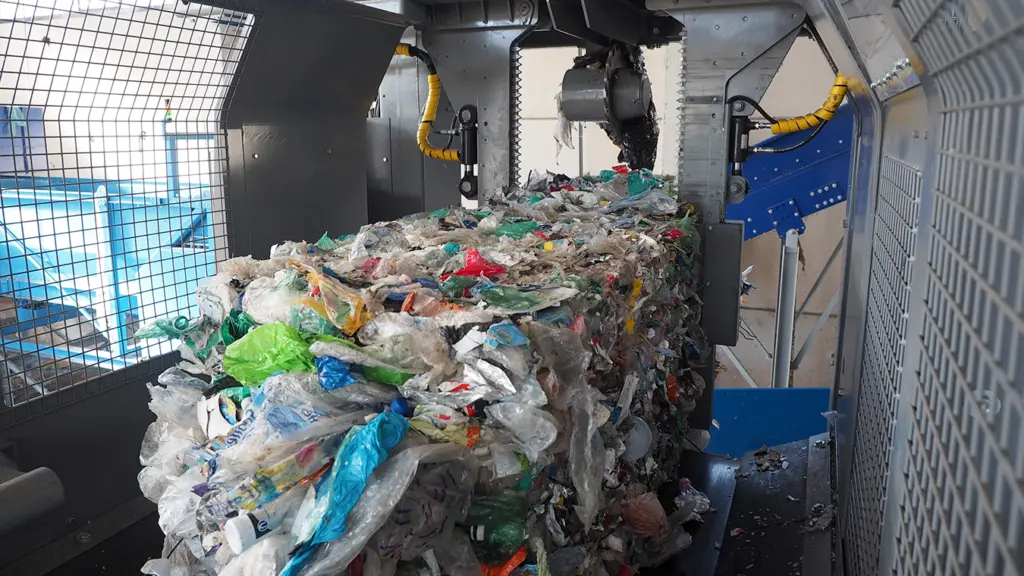
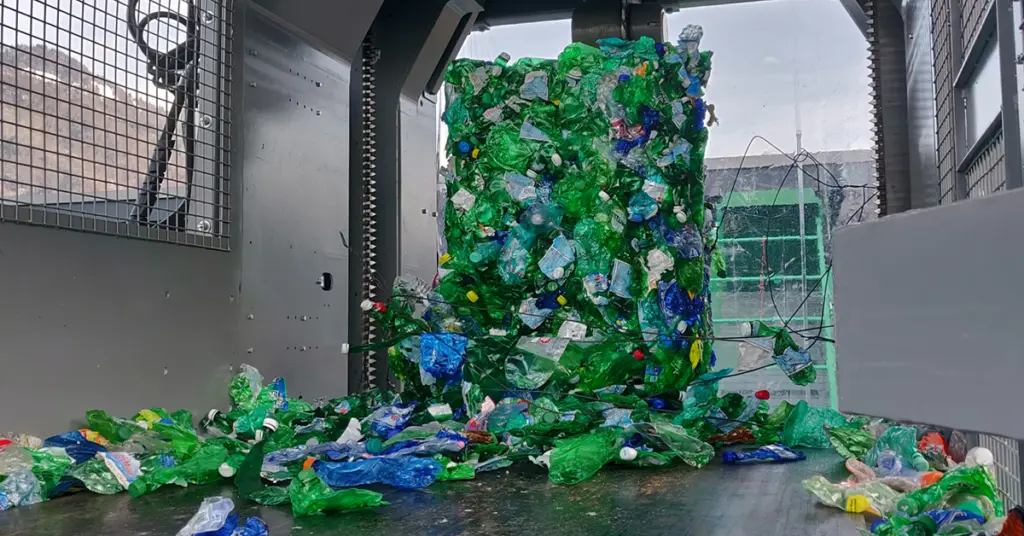
Reference Poly Recycling AG (Switzerland) automated PET bale dewiring at its Bilten, Canton Glarus plant with the Bale Dewiring, delivered in December 2018,
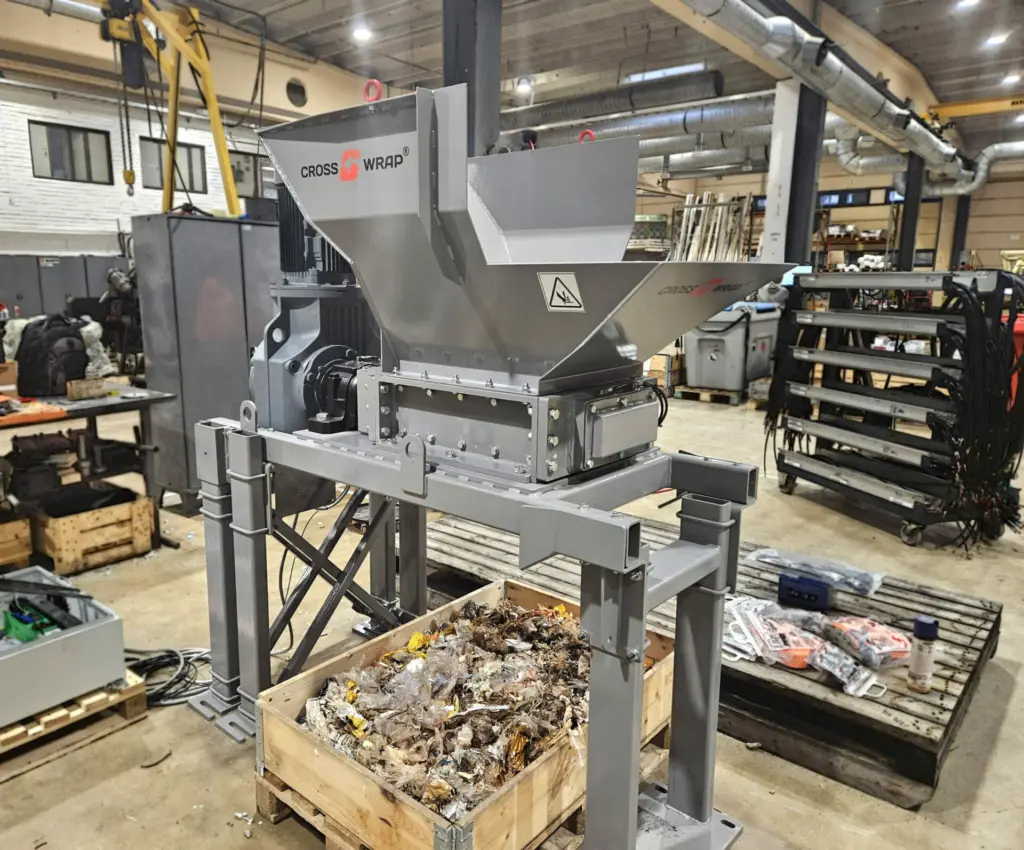
After they are coiled or shredded, wires require far less space and are easier to handle. Also, they are ready for recycling – great way to get money back from wires. Learn more about our Additional features here.
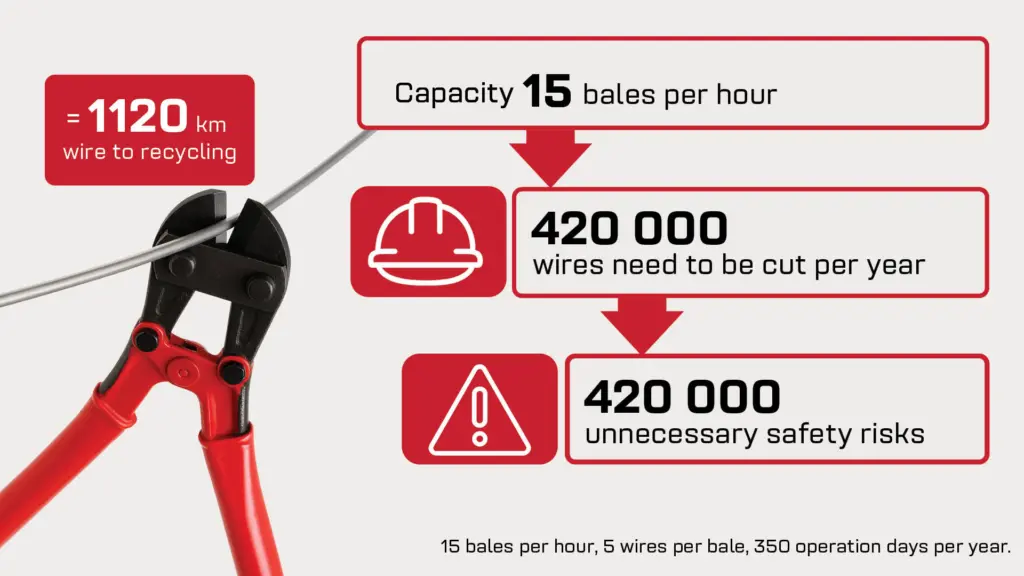
Manual wire cutting can be dangerous for employees. Dewiring eliminates risk of accidents, and saves lives and money. We have calculated that if your facility’s capacity is 15 bales per hour, 420 000 wires need to be cut every year. That means 420 000 unnecessary workplace safety risks caused by manual wire cutting. Resulting 1120 kilometres of wire going to the shredder (15 bales per hour, 5 wires per bale, 350 operation days per year).
Vertical wires up to 60 bales / h, Cross wired bales up to 30 bales / hour. If you want to hear more about bale sizes or you have other Bale Dewiring related questions, please ask from our experts.
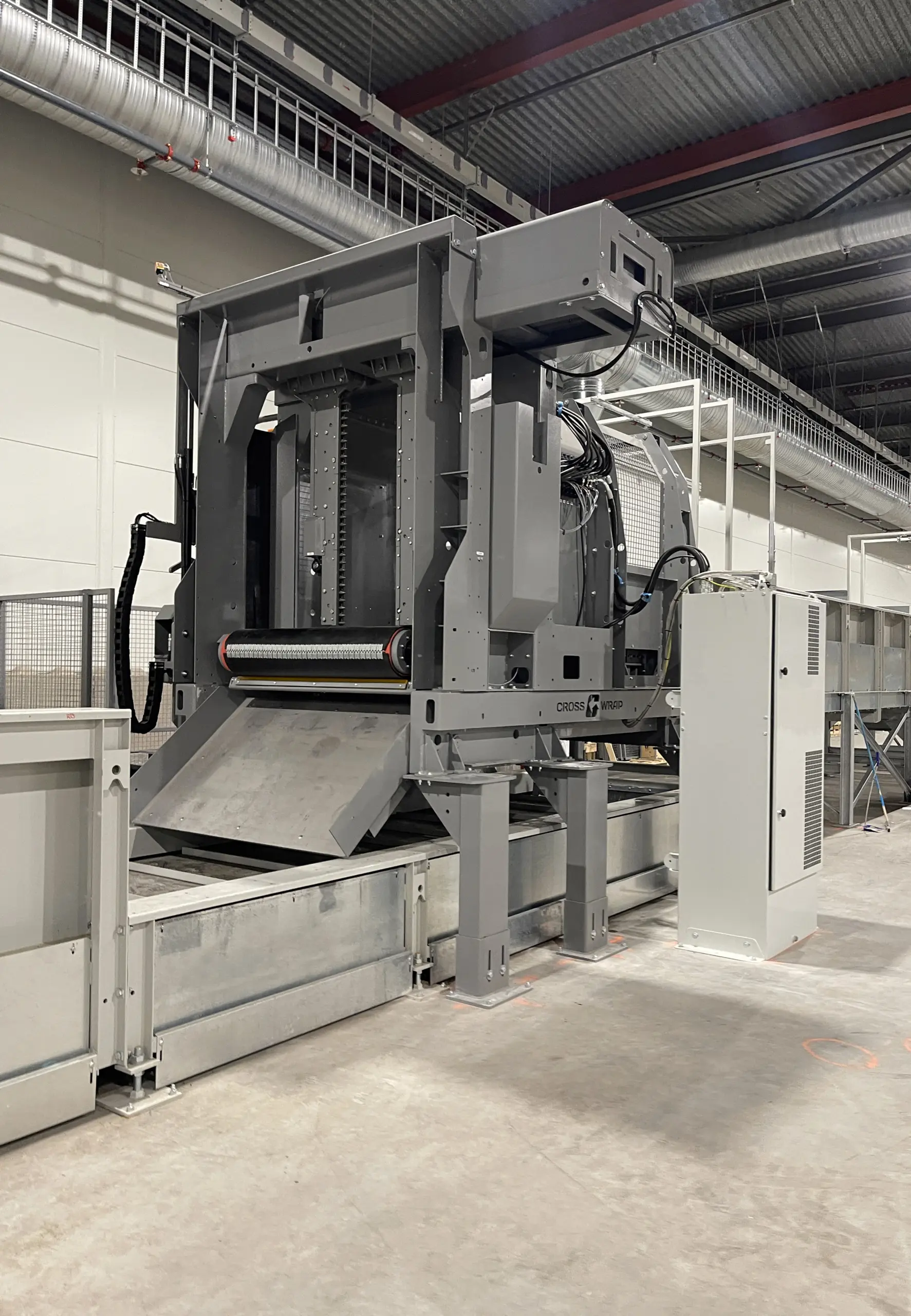
The machine is highly customizable and designed to fit into existing lines. Dimensions, height, and conveyor configurations can all be adapted to your layout. Everything outside the safety fences can be modified to match your setup.
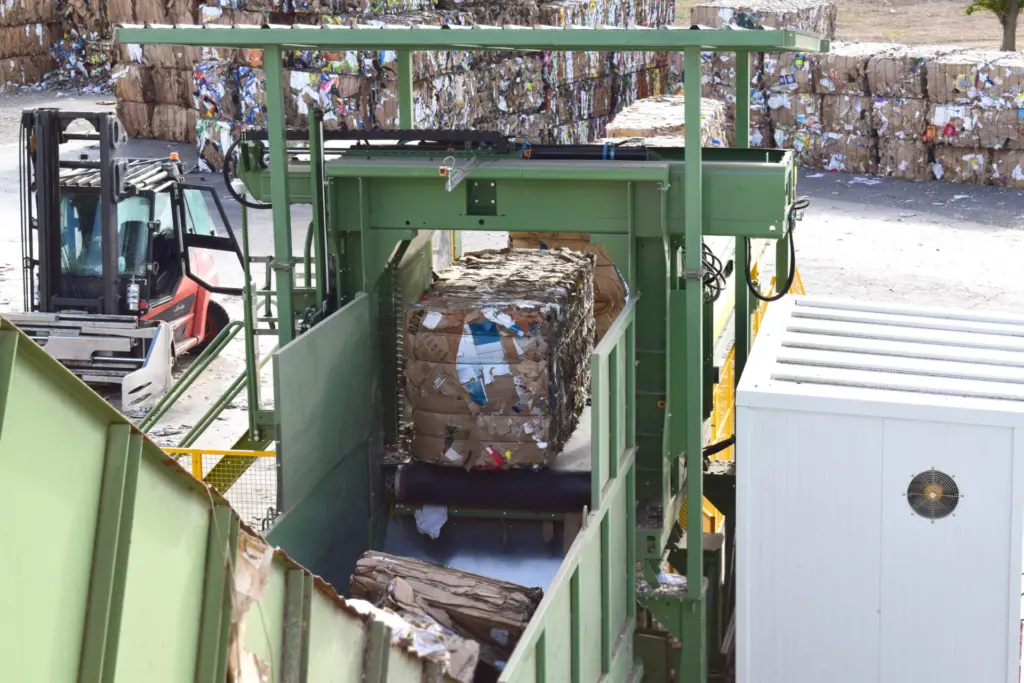
The dewiring process itself is fully automated. Typically one forklift operator is needed to load bales onto the infeed conveyor. No dedicated operator is required at the machine.
Yes. The Dewiring Machine is built for continuous industrial operation. When waiting for the next bale, it enters automatic standby and turns off the hydraulics, which reduces energy consumption without interrupting the process.
It depends on your current setup, but the most direct savings come from reduced labor, lower shredder wear, and fewer unplanned stops. Customers operating in two-shift production with two operators per shift typically see a payback period of approximately two years. Customers also report up to 50% less wear and tear on shredders after installing the Dewiring Machine before the shredder.
Cross Wrap’s own service team travels globally and is available for on-site support, wherever your facility is located. In addition, we have local service partners in Finland, UK, Norway, France, Netherlands, Germany, Spain, Italy, Chile, and the USA for faster regional response. We also offer spare parts packages delivered together with new machines to minimize any risk of downtime.
Why choose Cross Wrap as a partner?
Cross Wrap is a Finnish company with a proven track record in automated bale handling for the global recycling, waste, and industrial sectors.
With 700 installations in more than 65 countries, Cross Wrap is known for its innovative bale wrapping, dewiring, and opening machines, designed to improve safety, efficiency, and sustainability in material processing. Every machine is built in Finland.
Cross Wrap was founded in 1994. Today, we are part of Saalasti Group, sharing a commitment to clean technology and durable engineering. Cross Wrap’s mission is to enable cleaner, safer, and more efficient material flows, supporting customers across plastics, paper, board, waste, and fuel processing industries.
Let’s Talk About Your Line.
Contact us to learn more how the Bale Dewiring can improve safety, efficiency, and throughput in your facility.